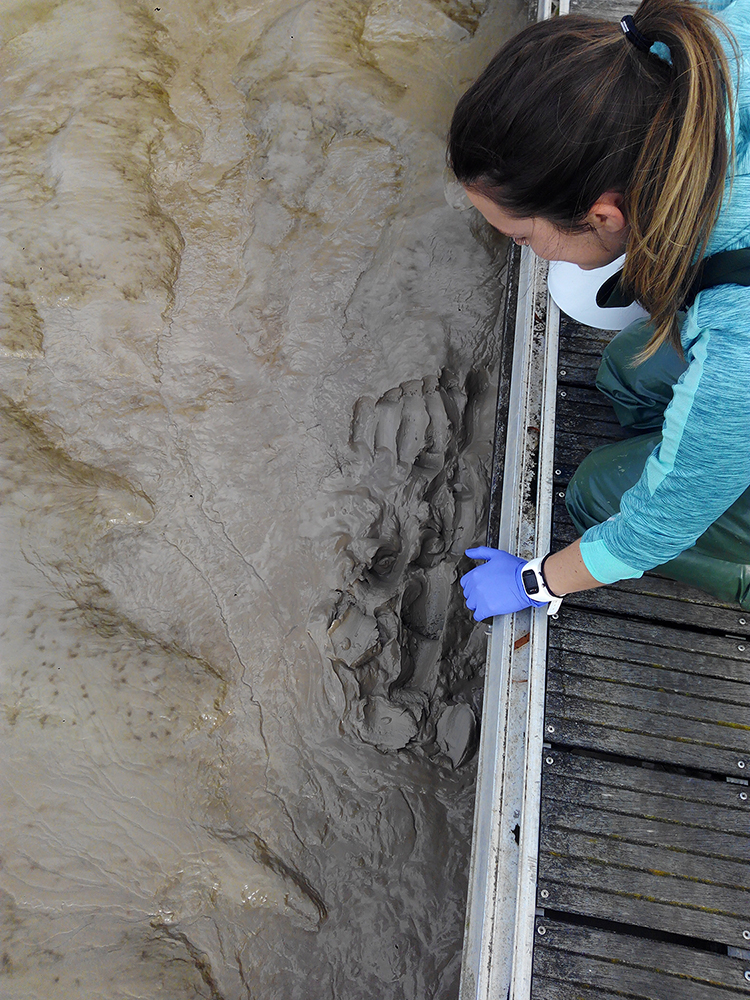
The presence of high levels of ancient pollutants in subsurface sediments are a high potential environmental risk that could affect environmental quality if physico-chemical conditions are altered at increasing i.e. dissolved oxygen in the water after dredging operations. Potential adverse effects can compromise the survival of species posing effects on human health. Hence, a proper assessment of the potential adverse effects associated to the resuspension of contaminated subsurface sediments is crucial in order to regulate/optimise dredging activities and to help local authorities and stakeholders in the management of both, sediments and inland disposal of toxic residues.
HYPOTHESIS. A reliable endangerment assessment of the dormant hazards resulting from high levels of chemical pollutants in ancient sediments can be achieved, after knowing their dynamic fluxes across the sediment-water interface, applying accurate and reliable toxicity tests with ecologically relevant species in which biomarkers at different levels of biological complexity can be integrated. This approach will be valuable to assess the effects of the deployment of dredged sediments in-land combining sediment and soil toxicity tests.