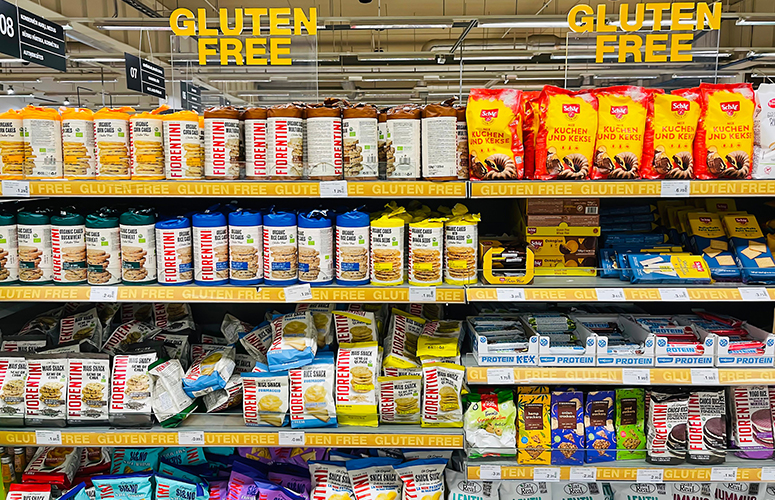
The GLUTEN3S research group of the University of the Basque Country (EHU) has identified the presence of fructans and amylase/trypsin inhibitor (ATI) proteins in gluten-free beers made from barley, compounds that can cause digestive symptoms in sensitive individuals. Its content is comparable to that of traditional beers containing gluten, according to a study published in the Journal of Food Composition and Analysis.
An EHU study reveals that gluten-free beer may contain compounds that cause digestive upset
Gluten-free beers made from barley have levels of fructans and ATI proteins similar to their gluten-containing versions
- Research
First publication date: 25/11/2025
The growing demand for gluten-free products has prompted the brewing industry to develop new varieties made from barley that has undergone gluten removal processes. However, the absence of gluten as such does not imply the absence of other compounds capable of causing digestive upset in sensitive individuals. This is borne out by a study analysing 60 samples of Spanish beers, both with and without gluten, by the EHU's GLUTEN3S research group, and funded by the Spanish Ministry of Science, Innovation and Universities, the Basque Government and the EHU.
Fructans and ATIs: natural compounds that also matter
The work focused on two types of molecules found in cereals: fructans and amylase/trypsin inhibitor (ATI) proteins. Fructans are complex carbohydrates that act as an energy reserve in numerous plants, such as garlic, onions, barley, wheat, and bananas. Although they have beneficial prebiotic effects, they can cause bloating, gases, or abdominal pain in sensitive individuals.
Fructans belong to the FODMAP group; they are short-chain carbohydrates present in everyday foods and which can cause gastrointestinal symptoms in people with digestive sensitivity, such as those who suffer from Irritable Bowel Syndrome (IBS). Temporarily restricting these foods may help to reduce these symptoms.
ATIs are proteins that protect plants against pests and insects, but which can activate the innate immune system in the human body. Various studies regard them as a significant trigger in non-coeliac gluten sensitivity, associated with digestive discomfort and, in some cases, inflammatory processes.
The results show that there are no significant differences between beers with and without gluten in terms of fructan and ATI content. Although gluten-free beers comply with the regulations and are safe for people with coeliac disease, the presence of these compounds could explain why some people continue to experience discomfort even when they opt for gluten-free products. “We have opened up a new avenue to explain the symptoms experienced by people who consume gluten-free beer, an alternative to research focusing on the immunogenic peptides that may be present in this beverage,” said Jonatan Miranda, author of the article and member of the GLUTEN3S research group.
Differences between batches and a proposal for more informative labelling
The analysis also showed that the amount of fructans and ATIs may vary depending on factors such as the original dry extract, alcohol content, or differences between production batches. These variations highlight the need for more specific controls, comparable to those already in place for gluten detection.
Taking these results as the basis, the GLUTEN3S research group proposes moving towards complementary labelling that allows beers low in fructans to be identified, thus facilitating a more informed choice for those who suffer from digestive sensitivity or FODMAP intolerance. “Other countries are already working on this,” said Dr Miranda. In addition to analysing the presence of these compounds, the study also tests and confirms the effectiveness of new analytical methods capable of detecting fructans and ATIs. These tools enable the brewing industry to better control the composition of its products and help research teams drive forward their research into nutrition and digestive health, as they offer more reliable, detailed measurements. “The methods developed seek to facilitate control by the brewing industry, by offering rapid, simple, routine procedures,” concluded Miranda.
This study was funded by the R&D&I project PID2021-125695OA-I00 (MCIN/AEI/10.13039/501100011033), with support from the European Regional Development Fund (ERDF) and the Basque Government within the “From Farm to Table 2022–2026” Plan.
Bibliographic reference
- Impact of gluten, alcohol, original extract and batch variation on FODMAP and ATI levels in beer: A comparative study of Spanish macrobreweries’ beers
- Journal of Food Composition and Analysis
- DOI: 10.1016/j.jfca.2025.108094