

A UPV/EHU research group has discovered a novel species of micro-organism in the Añana Salt Valley in the province of Álava (Basque Country). The discovery of this bacterium, which has been named Altererythrobacter muriae (SALINAS58), points to the biodiversity existing in the area and the ecological value of salterns.
Novel bacterial species discovered in the Añana Salt Valley
The MikroIker group of the UPV/EHU-University of the Basque Country has described the novel micro-organism present in this saltern
- Research
First publication date: 03/03/2022
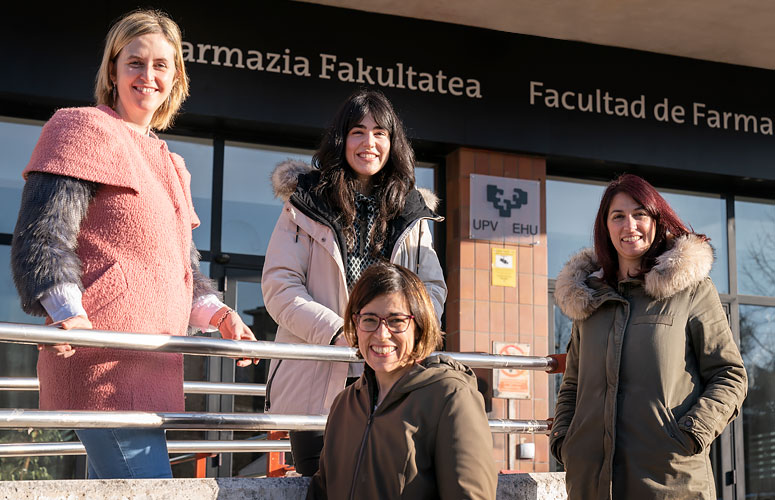
The Añana Salt Valley area is a very important biodiversity site, especially with respect to species present in water. Analyses carried out by the UPV/EHU’s MikroIker research group have provided information about the existence of a novel species unique to this environment and not replicated anywhere else. "The microbial population studies carried out over the last few years in the Añana Salt Valley are enabling us to understand the evolution and relationship between the species detected in this environment. We have seen that we may well be coming across certain novel bacterial species not previously described and ones that are unique to this ecosystem; as a result, the exclusive biodiversity of the site is established and its ecological value increased," explained Ilargi Martinez-Ballesteros.
An example of this is the novel bacterial species isolated in the water of the Santa Engracia spring; it has been named Altererythrobacter muriae (SALINAS58), and, so far, has only been identified in that location. The conclusions of the research carried out by the MikroIker group have been published in the 'International Journal of Systematic and Evolutionary Microbiology' under the title 'Altererythrobacter muriae sp. nov., isolated from hypersaline Añana Salt Valley spring water, a continental thalassohaline-type solar saltern'.
The Añana Salt Valley is located on a large blister of salt that resulted from the drying up of an ancient sea 200 million years ago. Fresh rainwater passes through the deeper layers of halite or rock salt (NaCl), dissolves it, and emerges in the form of hypersaline springs, thus providing a habitat for a great diversity of halophilic and halotolerant micro-organisms.
Hypersaline environments are regarded as metabolically extreme and are inhabited by a diverse group of micro-organisms that are able to survive in varying NaCl conditions (2-30 %), and which are known as halophiles. There is a broad variety of halophiles (belonging to the three main domains of life, Archaea, Bacteria and Eukarya), which transform a wide range of substrates in hypersaline habitats. Moreover, the various haloadaptation mechanisms developed by micro-organisms in these extreme conditions have led to the production of compounds useful for microbial survival, which in turn have proved to be of great interest in the fields of biomedicine, bioremediation or the food industry. "Micro-organisms are indispensable in maintaining the biosphere because they regulate the biogeochemical cycles of the main elements, participate in the processes to decompose organic matter, contribute to the nutrient cycle, and degrade contaminating compounds; such processes are indispensable in maintaining ecosystems," said Ilargi Martinez-Ballesteros.
Given the importance of generating knowledge about microbial diversity in extreme environments, such as the Añana Salt Valley, it is important to study the composition of the prokaryotic communities (bacteria and archaea) in this natural environment, such as the saline springs located at different points in the valley, which are the source of supply for the process of obtaining salt, as well as the brackish tributaries that emerge in other locations in the valley. "This will allow us to generate basic knowledge about the microbial populations present there, their distribution patterns and their potential biotechnological use for the benefit of both human and environmental health. Conventional microbiological and chemotaxonomic analysis methods or comparative genomics have already allowed interesting and numerically important types of halophiles and halotolerants to be recognised," concluded Ilargi Martinez-Ballesteros.
Bibliographic reference
- Altererythrobacter muriae sp. nov., isolated from hypersaline Añana Salt Valley spring water, a continental thalassohaline-type solar saltern
- International Journal of Systematic and Evolutionary Microbiology. Volume 71, Issue 3
- DOI: 10.1099/ijsem.0.004734