According to a comparative study of the microbial community in the water and biofilm (the layer of microorganisms that grows on rocks) of the Urola River basin, differences were observed in both the microbial composition and the diversity of antibiotic resistance genes between the two environments. The researchers pointed out that the effects of the treatment plant can be seen in the river water, but they diminish as the distance from the discharge point increases. On the other hand, the biofilm could act as a reservoir for certain antibiotic resistance genes and serve as an indicator for studying these river ecosystems.
Freshwater systems provide key to understanding antibiotic resistance
An EHU team explores the effect of treated effluent from municipal wastewater treatment plants on freshwater microbial communities
- Research
First publication date: 08/01/2026
Antibiotic resistance has become one of the main threats to public and animal health worldwide in recent decades. The widespread, inappropriate use of antibiotics has caused the problem of antibiotic resistance to grow; in other words, antibiotics are becoming ineffective in treating infections. “Although initially more attention was paid to clinical and veterinary settings, recently the importance of the environment has been highlighted,” explained Irene Beltrán de Heredia-López, researcher at the University of the Basque Country (EHU).
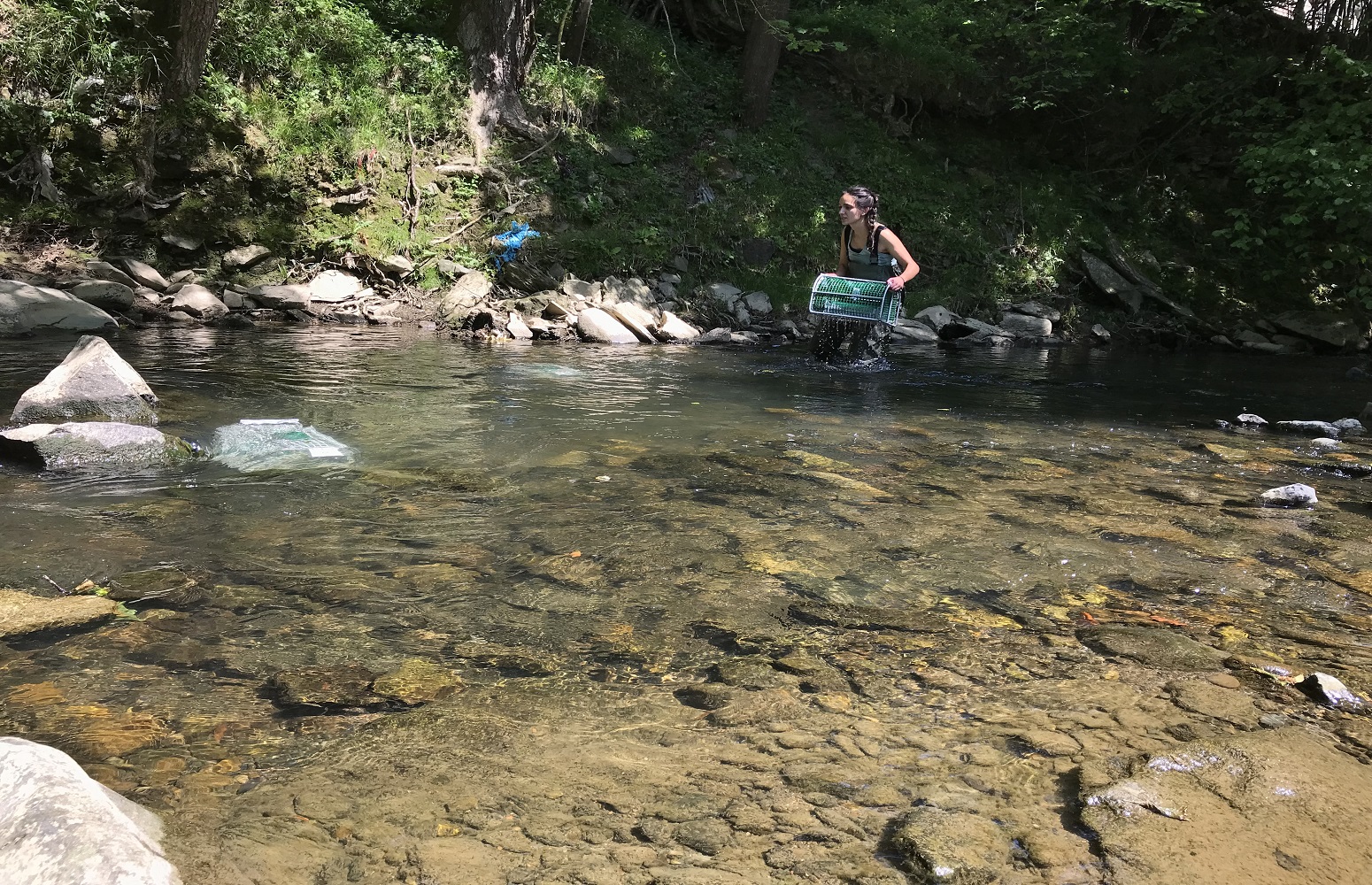
Although wastewater treatment plants comply with the limits established by legislation, these facilities act as points where contaminants from urban centres are concentrated. That way, they can alter freshwater ecosystems and are regarded as critical points in the dynamics of antibiotic resistance, especially when they receive water from hospitals or healthcare facilities. In this regard, the EHU researchers conducted a study in the Urola river basin, in which they compared the microbial communities contained in the water and in the biofilm (obtained after a four-week colonisation period using artificial systems set up in the river itself).
Metagenomics for detecting resistance genes
For the study, they used metagenomics, a technique that allows the genes present in microbial communities to be identified from the DNA extracted from environmental samples, which also include genes related to antibiotic resistance. “To date, few studies have examined the metagenome of biofilm and compared it with that of water,” said Estilita Ruiz-Romera, Professor of Environmental Technologies at the EHU. By using this, they managed to see “what type of resistance genes exist in the two environmental matrices”, added Beltrán de Heredia. “This enabled us to see what mechanisms these microorganisms use to fight antibiotics.” As the researchers explained, the advantage of the data obtained from metagenomic studies is that they can be reanalysed in the future if the situation so requires.
This research has shown that “it is important to study the different environmental matrices of rivers (water, biofilm and sediments) together, because they provide different information. We saw that water reflects the impact of effluent more immediately, while biofilm could act as a deposition for certain genes, some of which are not present in the water”, explained Beltrán de Heredia. They also pointed out that “although the effects of the treatment plant diminish as the water flows downstream, the biofilm could become a kind of reservoir for certain antibiotic resistance genes”, added Ruiz-Romera.
The researchers stressed that it is very important to expand the information, in these environments, especially because “antibiotic resistance is and will continue to be a real problem in the coming years. There are many studies that point to the great diversity of the genes present, but it would be necessary to see which are the most relevant. However, a lot of work still lies ahead.
Ruiz-Romera highlighted the need to “attach importance to the role that can be played by the environment in the development of these resistances. We must not forget that treatment plants are a concentration point for contaminants. Thanks to the most advanced technologies used in these plants, many of the contaminants are prevented from reaching our rivers, but wastewater treatment in treatment plants is not designed to eliminate all of them, let alone eliminate antibiotic resistance genes. It is necessary to continue moving forward”. In line with this idea, “the new European directive on urban waste water treatment (EU Directive 2024/3019) envisages the future incorporation of more advanced technologies that will reduce the presence of several of these contaminants in effluents reaching aquatic ecosystems”, added Beltrán de Heredia.
Planning monitoring programmes in freshwater ecosystems
In this regard, the EHU researchers stressed that “many studies are needed to deepen our understanding of the evolution and dynamics of antibiotic resistance in freshwater ecosystems and, specifically, of the existence of links between environmental resistance and that present in clinical and veterinary settings. This calls for the design of robust, adaptable monitoring strategies and, at the same time, the implementation of routine monitoring programmes in freshwater ecosystems. The researchers have presented a roadmap for carrying out this monitoring to guide the research community and decision-makers in the design and implementation of such programmes.
Additional information
Irene Beltrán de Heredia, a researcher in the Department of Chemical and Environmental Engineering at the Faculty of Engineering - Bilbao, has just defended her PhD thesis under the supervision of Estilita Ruiz-Romera, Professor of Environmental Technologies, and Itziar Alkorta-Calvo, Professor of the Department of Biochemistry and Molecular Biology. These studies are part of a research initiative supported by the Hydro-Environmental Processes (HGI) and Interdisciplinary Approach to Combating Antibiotic Resistance Using Molecular, Structural and Nanotechnological Strategies (INTER-RA) research groups at the EHU and within the Joint Research Lab on ENVIRONMENTAL ANTIBIOTIC RESISTANCE (supported by Euskampus), which promotes and leads scientific research and knowledge transfer relating to the increase in antibiotic resistance and the risk this poses for environmental and human health.
Bibliographic reference
- A Practical Framework for Environmental Antibiotic Resistance Monitoring in Freshwater Ecosystems
- Antibiotics
- DOI: 10.3390/antibiotics14080840