
Cabecera-Aula
Asset Publisher
Chip Chair
The SoC4sensing Chip Chair promotes activities to disseminate microelectronics to students, companies, and society. The main objective of these actions is to attract talent to the degrees that graduate professionals need. To this end, the aim is to visualize to society the possibilities offered by developing a professional activity in electronic and microelectronic design.
The Aula Chip, launched from SoC4sensing, is an impact tool for meeting dissemination objectives. This Classroom has the format of the Company Classroom of the School of Engineering of Bilbao.
The Business Classrooms are spaces located in the school itself. They are created to encourage student interest in the entities that sponsor the classrooms and to promote R&D&I activities of interest to the promoters. They are an effective instrument of collaboration between the School of Engineering of Bilbao, through its departments, and the companies, both in activities related to research, technological development, and innovation and in everything related to training, both for future engineers and in activities related to the recycling and continuous training of company personnel. There are currently 12 Company Classrooms.
Therefore, the Aula Chip promotes the visibility of the actions carried out in the Chair to students, companies, and society.
Asset Publisher
CRYSTALS-Dilithium post-quantum cyber-secure SoC for wired communications in critical systems
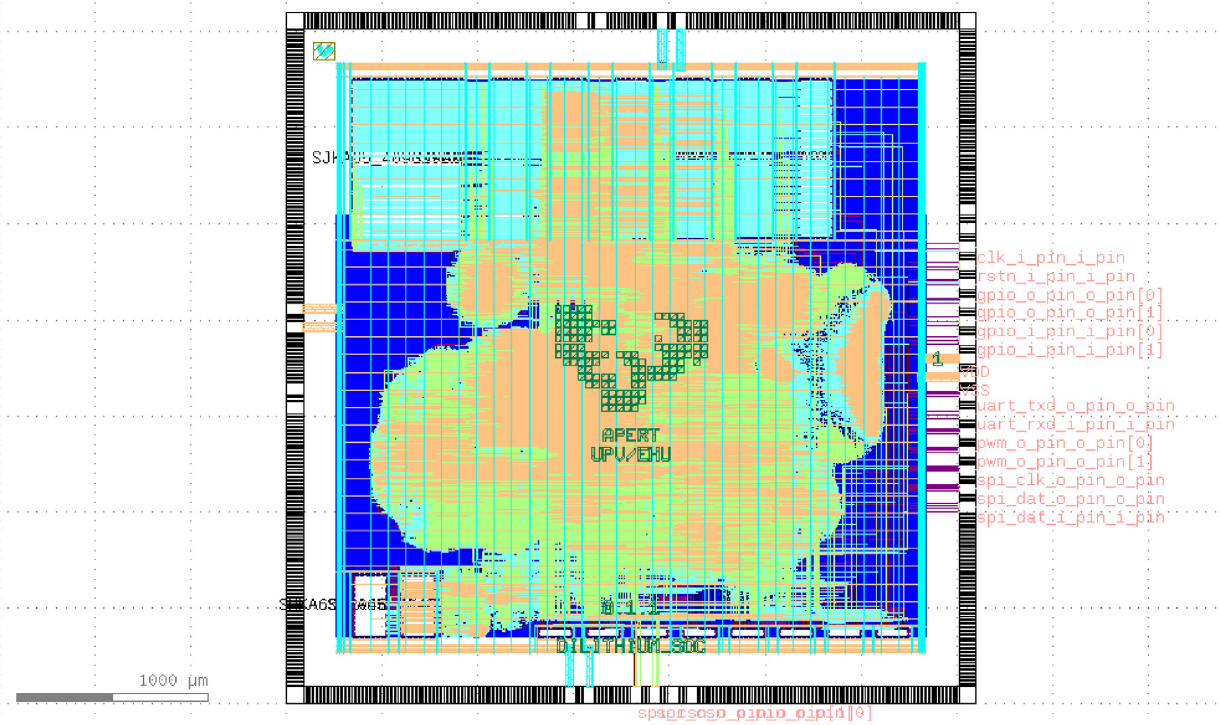
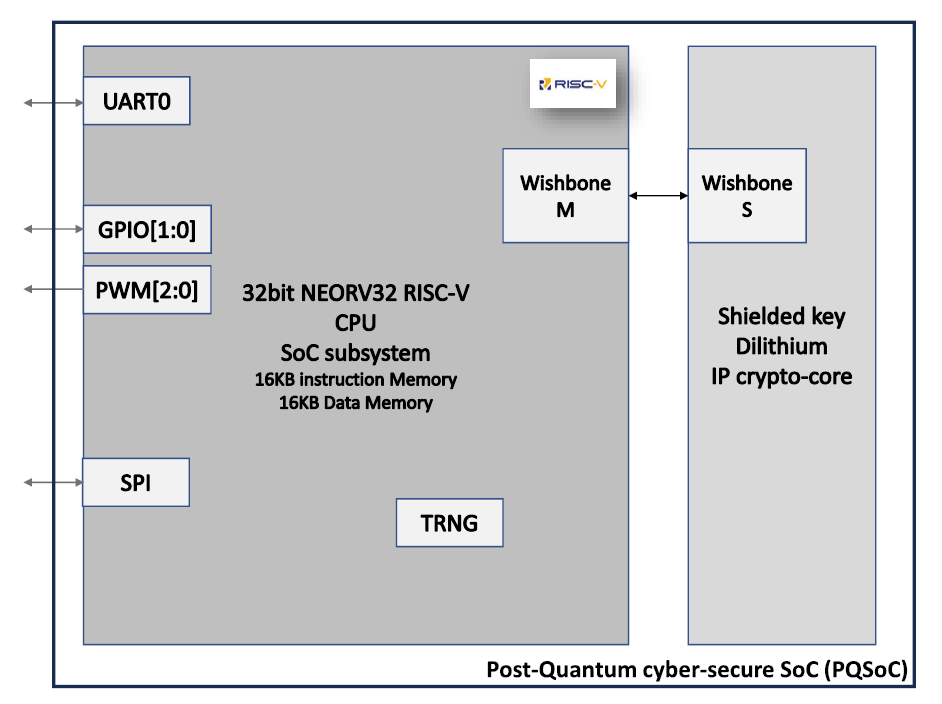
This research proposes a concept-proof ASIC semiconductor device design and implementation using 65 nm Ultra-Deep Submicron (UDSM) technology. This experimental SoC incorporates an energy-efficient RISC-V CPU and includes typical peripheral components commonly utilized in IIoTs.
First publication date: 12/01/2026
A novel concept-proof semiconductor implementation that fulfill the requirements in terms of power-consumption, resources utilization and PQC security level for Industrial IoT applications. The presented research analyzes the resources required by a high-performance CRYSTALS-Dilithium implementation on IIoT SoC devices.
- The archi-tecture and implementation of RTL-based CRYSTALS-Dilithium IP are presented and discussed.
- System-on-Chip semiconductor device composed of a RISC-V CPU subsystem and the CRYSTALS-Dilithium IP is developed in the scope of this research as a concept-prof to evaluate the viability of integrating PQC on resource-constrained devices for IIoT.
Link

Asset Publisher