
Doktorego tesiaren defentsa: Exploring natural language processing tools to support stem classrooms with multiple languages of instruction
Lehenengo argitaratze data: 2025/12/18
Egilea: Suna Seyma Uçar Goker
Izenburua: Exploring natural language processing tools to support stem classrooms with multiple languages of instruction
Zuzendariak: Itziar Aldabe Arregi / Nora Aranberri Monasterio
Eguna: 2025eko abenduaren 22an
Ordua: 10:30h
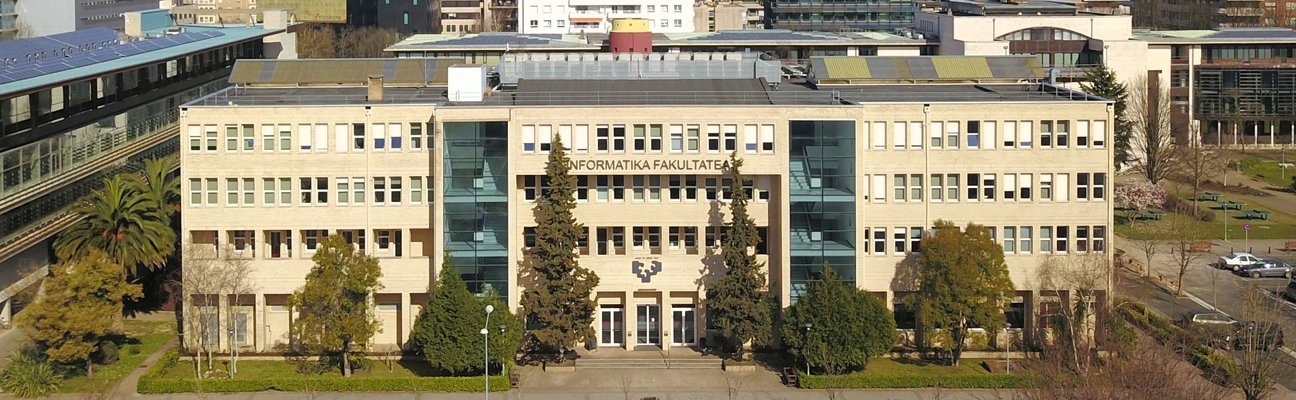
Lekua: Ada Lovelace aretoa
Abstract:
"In educational contexts with multiple languages of instruction, teachers face the dual challenge of teaching scientific content while supporting students’ language development. This is particularly the case in STEM classrooms in the Basque Autonomous Community, where instruction takes place in Basque, Spanish, and English. In this context, teaching goes beyond transmitting scientific knowledge: it involves mediating the linguistic and cognitive complexities of scientific discourse, and finding, developing, and adapting materials to student levels. It also involves coordinating teaching methodologies such as Integrated Treatment of Languages and Project-Based Learning, which are interdisciplinary, student-centered methodologies that are applied in the Basque Autonomous Community. These demands often exceed the time and resources available to teachers, limiting the full potential of these pedagogies.
This thesis explores the potential of Natural Language Processing tools to support teachers in preparing and adapting STEM teaching materials in classrooms. Three core areas are investigated: (1) Text Classification: To help teachers in selecting suitable materials, we compile a domain-specific corpus of secondary school science texts, annotated by level, and assess how well Machine Learning and Deep Learning approaches can assign ESO levels. (2) Question Generation: To foster critical thinking, we examine the use of Large Language Models to generate high-order questions guided by educational frameworks such as Bloom’s Taxonomy, Claim-Evidence-Reasoning, and divergent questioning. (3) Text Simplification: To make scientific texts simpler for secondary school students without compromising conceptual integrity, we investigate the capacity of Large Language Models to simplify informational science texts while preserving both linguistic quality and content.
Through a combination of automatic evaluation, corpus analysis, and linguistic and educational assessment, this thesis examines the technical performance, pedagogical relevance, and linguistic quality of the outputs of the Natural Language Processing tools. The findings highlight both the potential and the limitations of these systems in real-world educational contexts."