Glass Drawing 2026.Darwin
Data
- Title: Glass Drawing 2026.Darwin
- Art and Project: Olabe Basogain
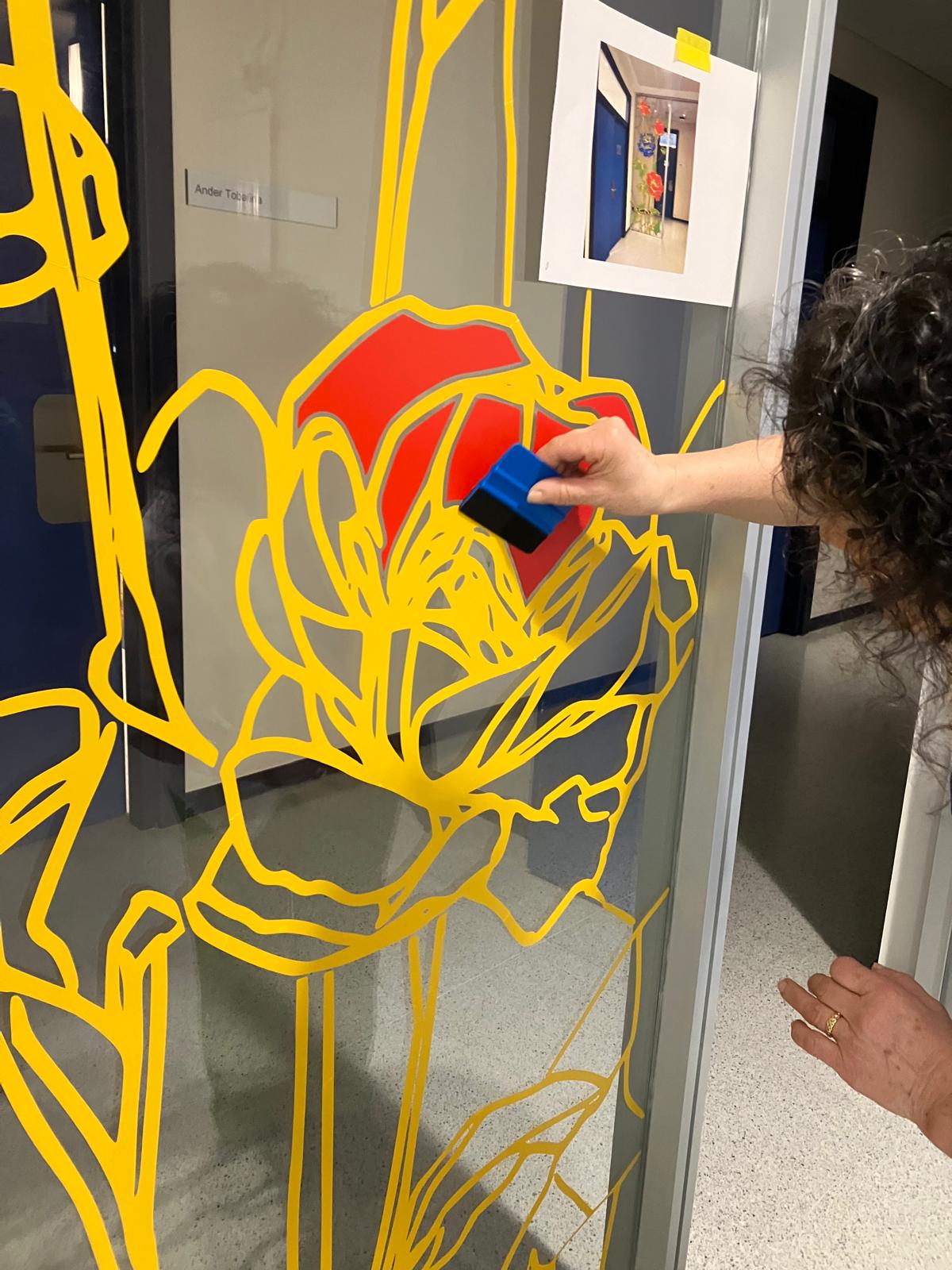
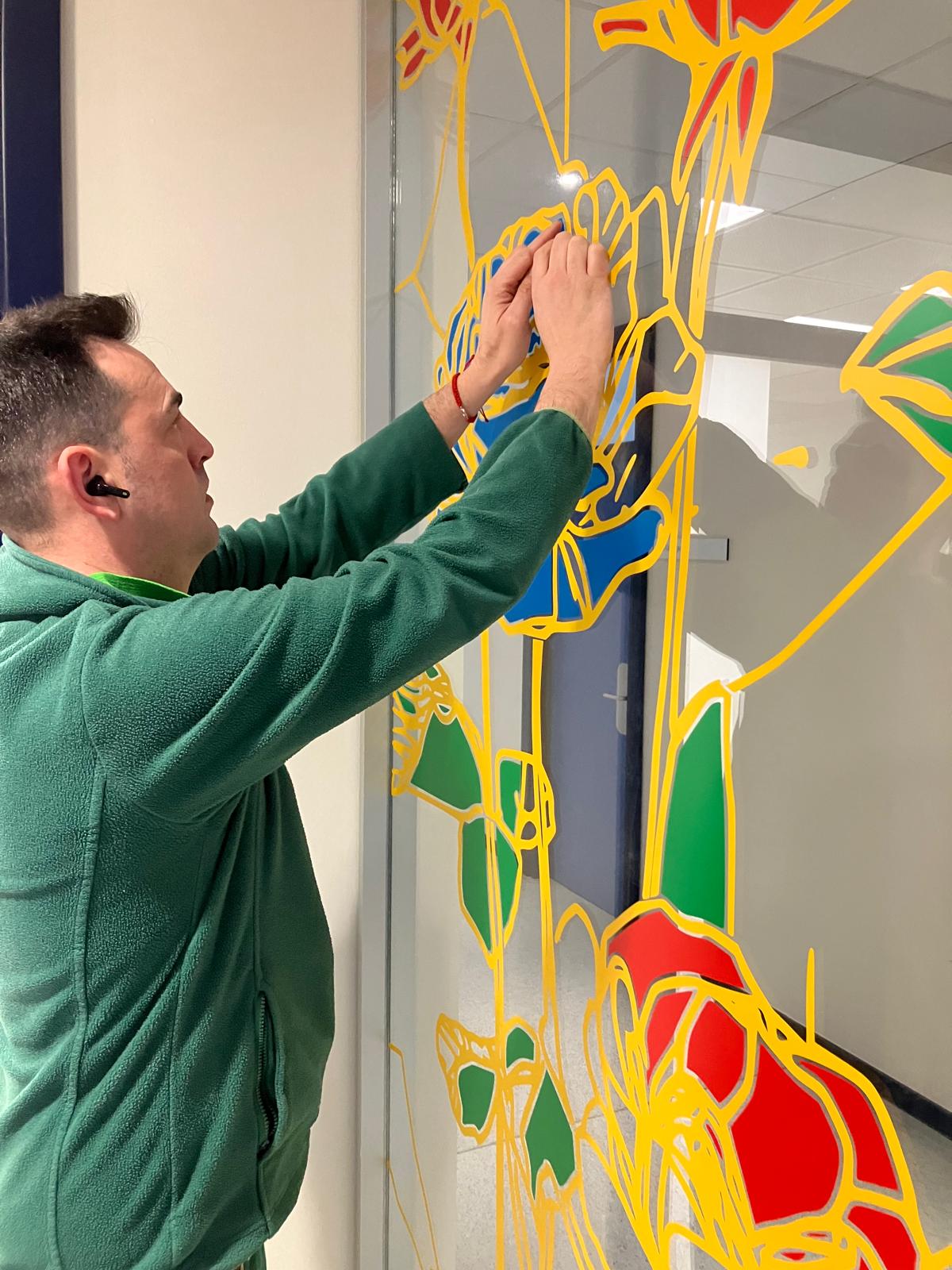
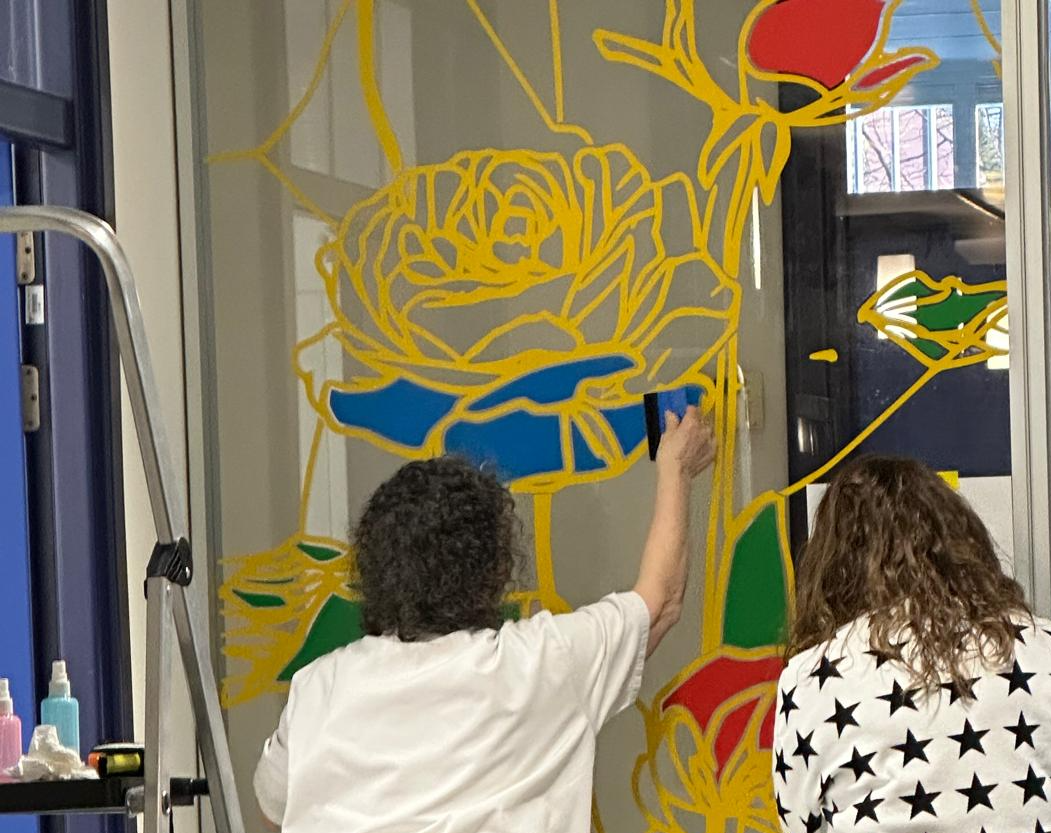
- Technique: Translucent vinyl on glass, 4 colours
- Size: 118 cm x 275 cm
- Date: February 2026
- Place: Ground Floor, next to QTAI Lab
Description
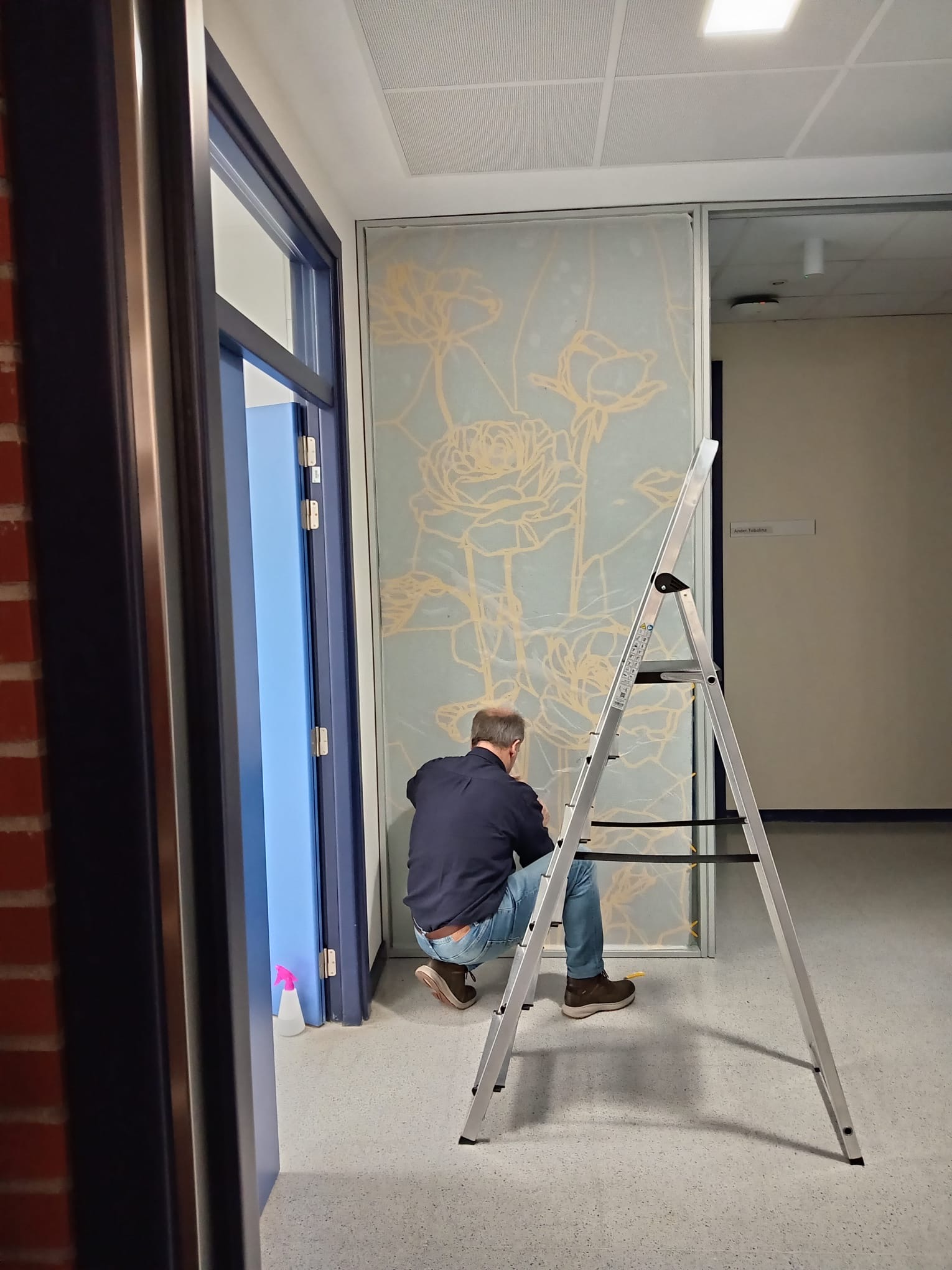
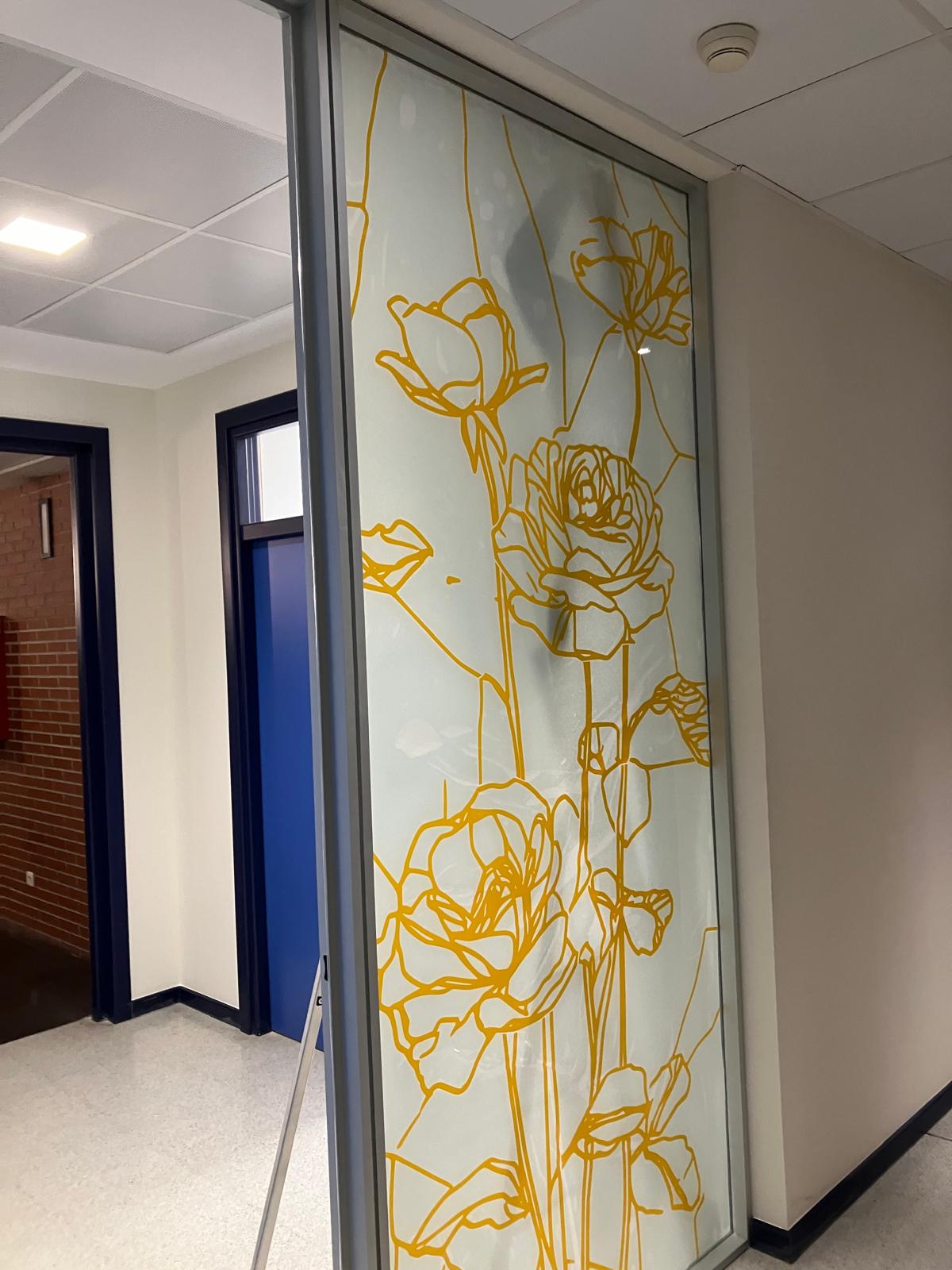
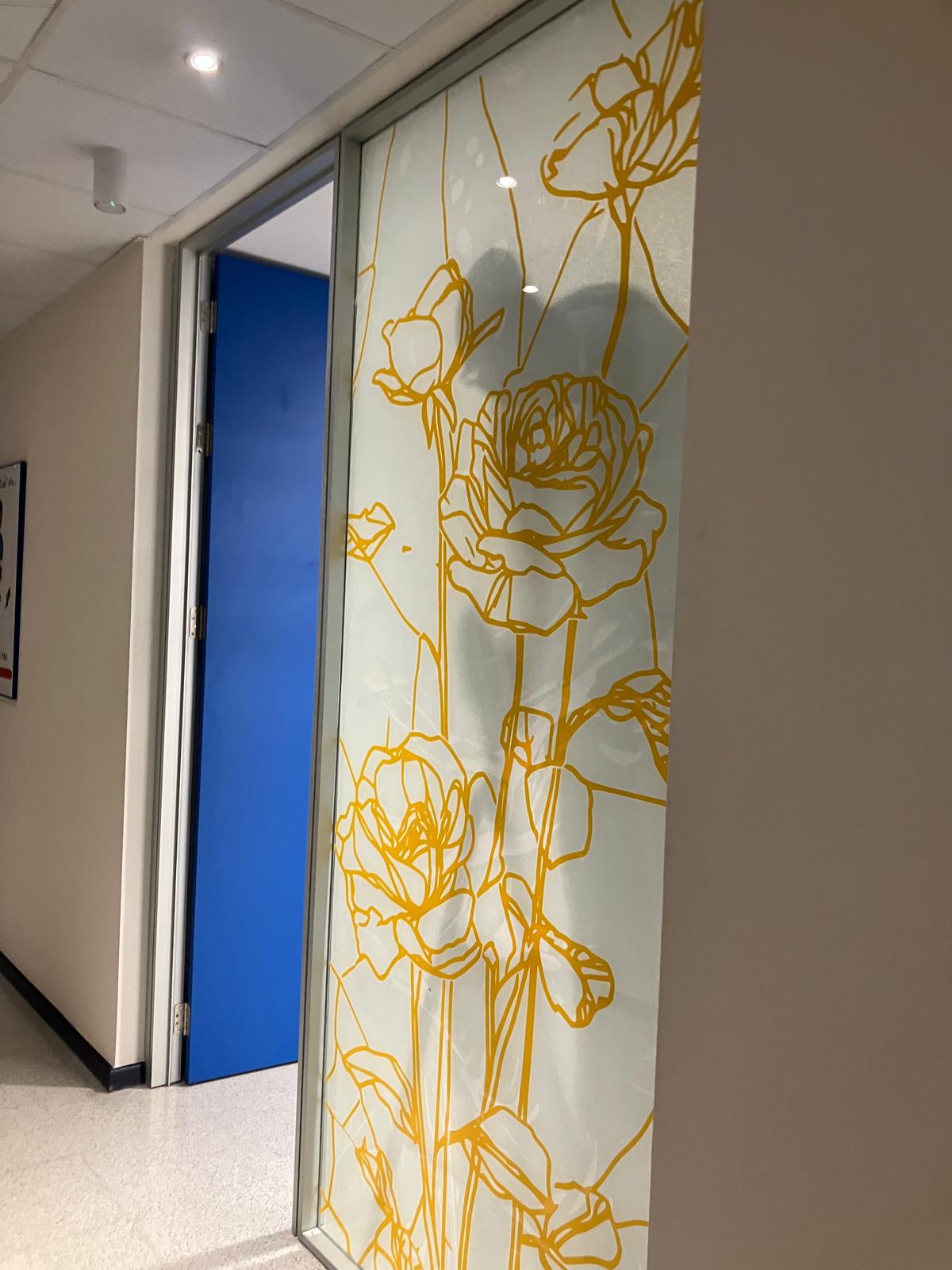
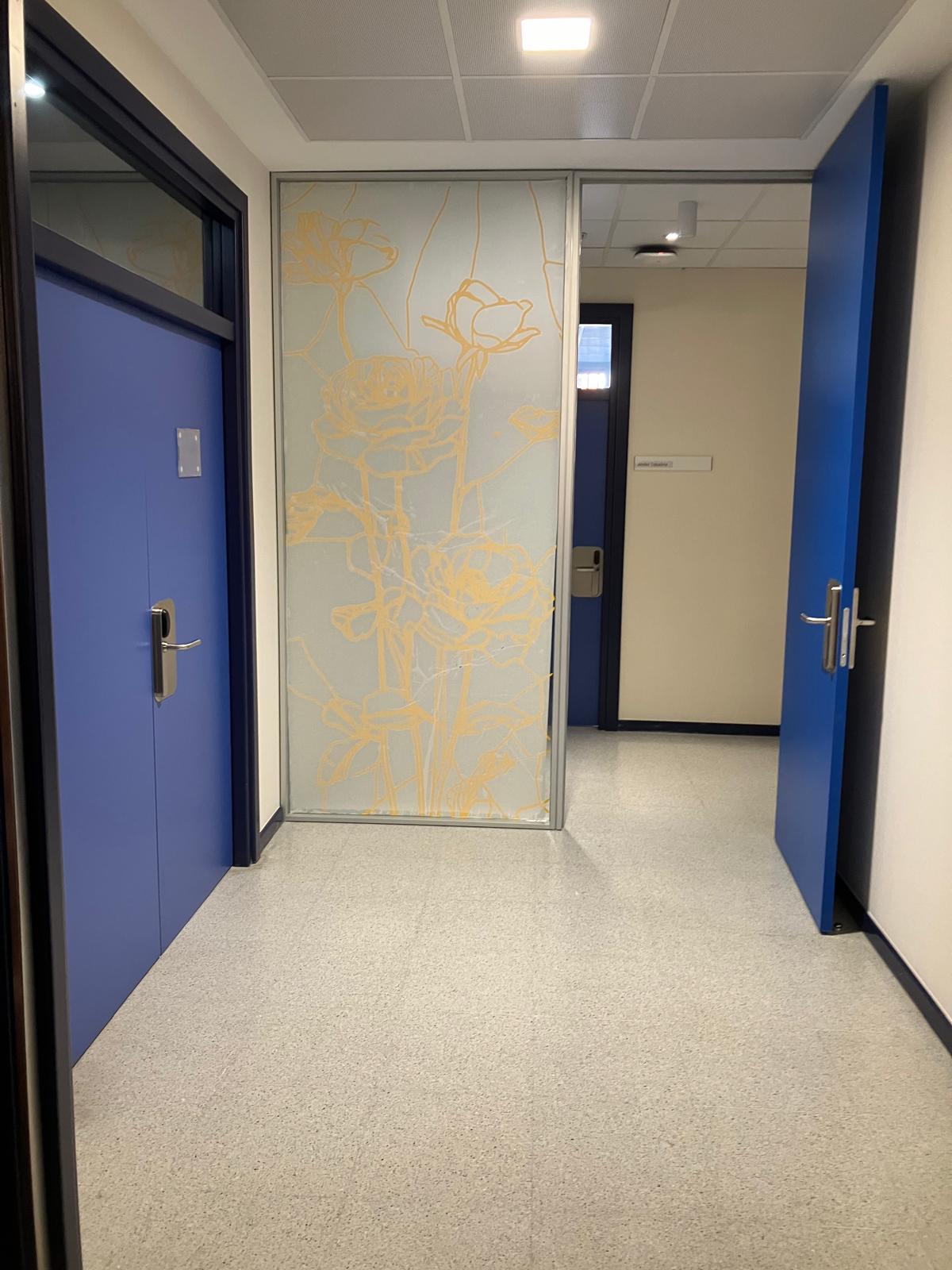
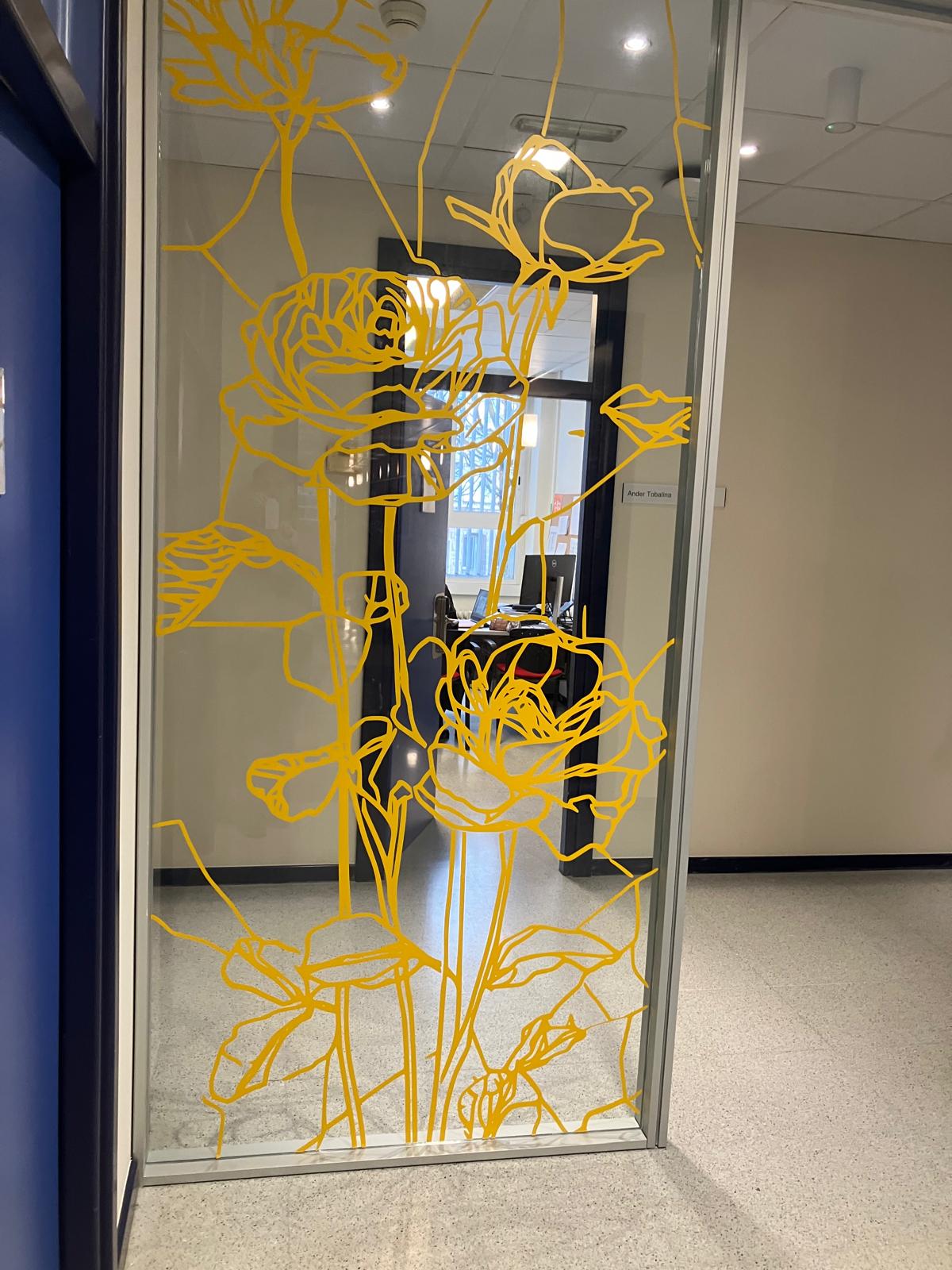
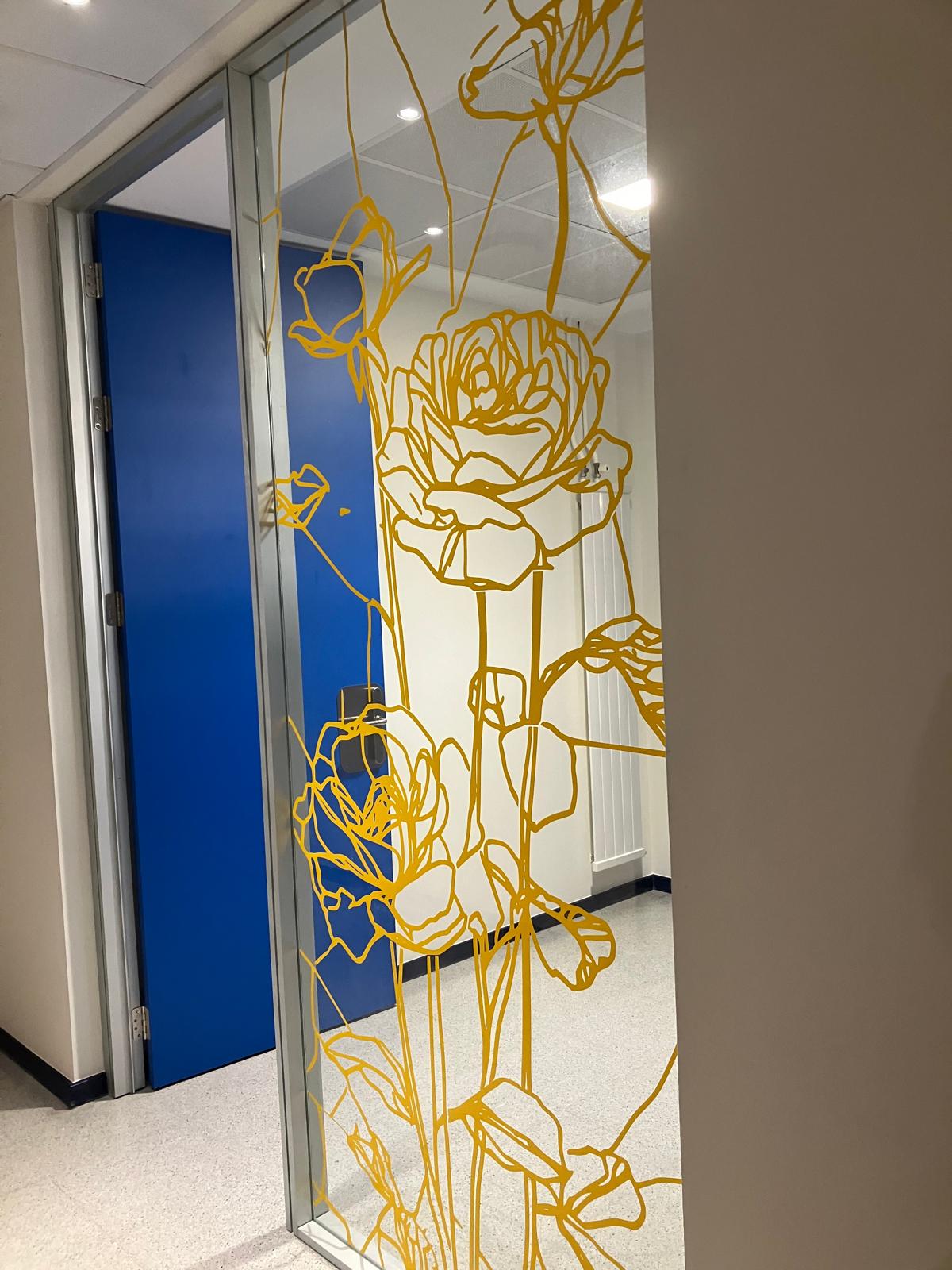
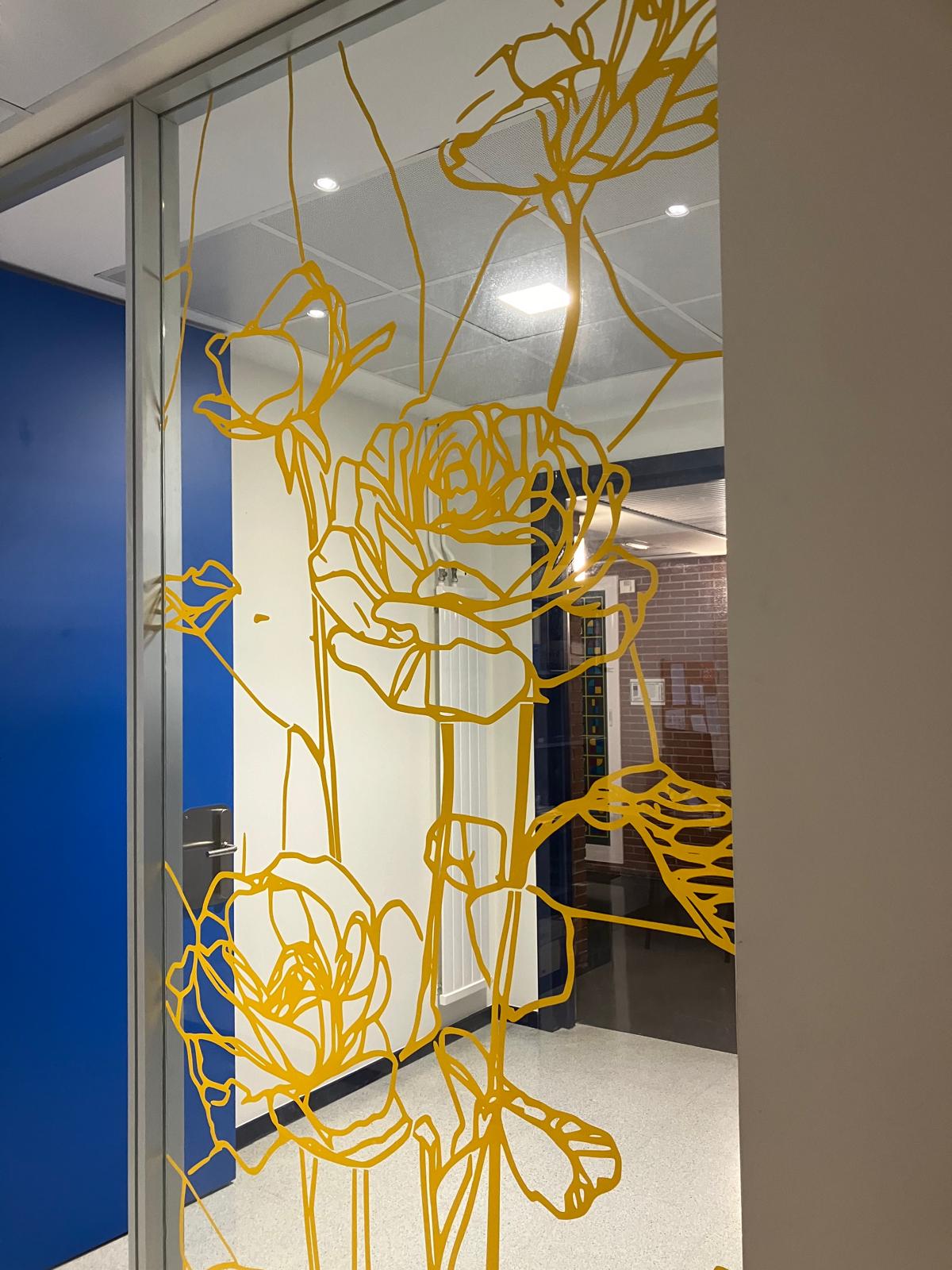
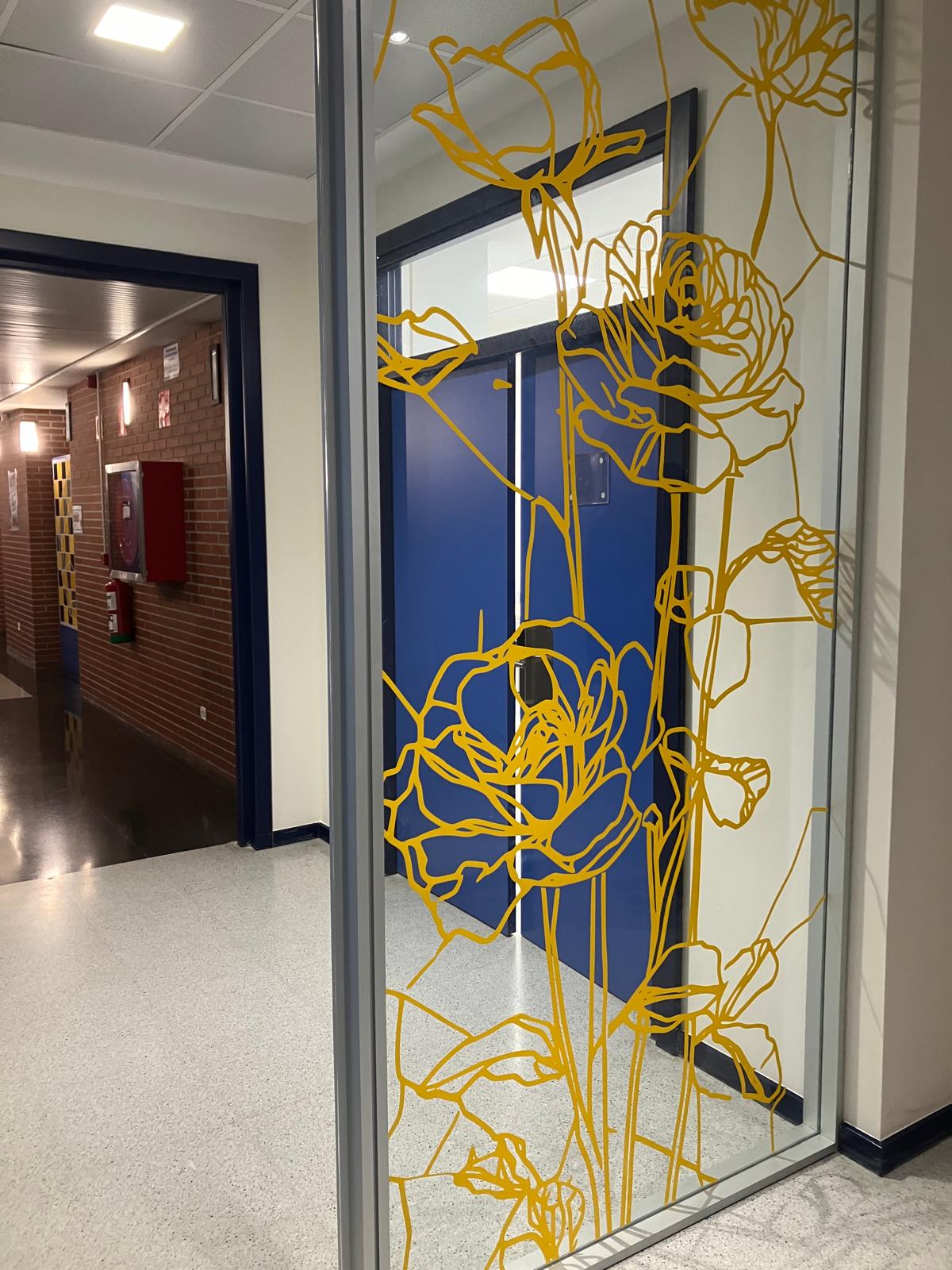
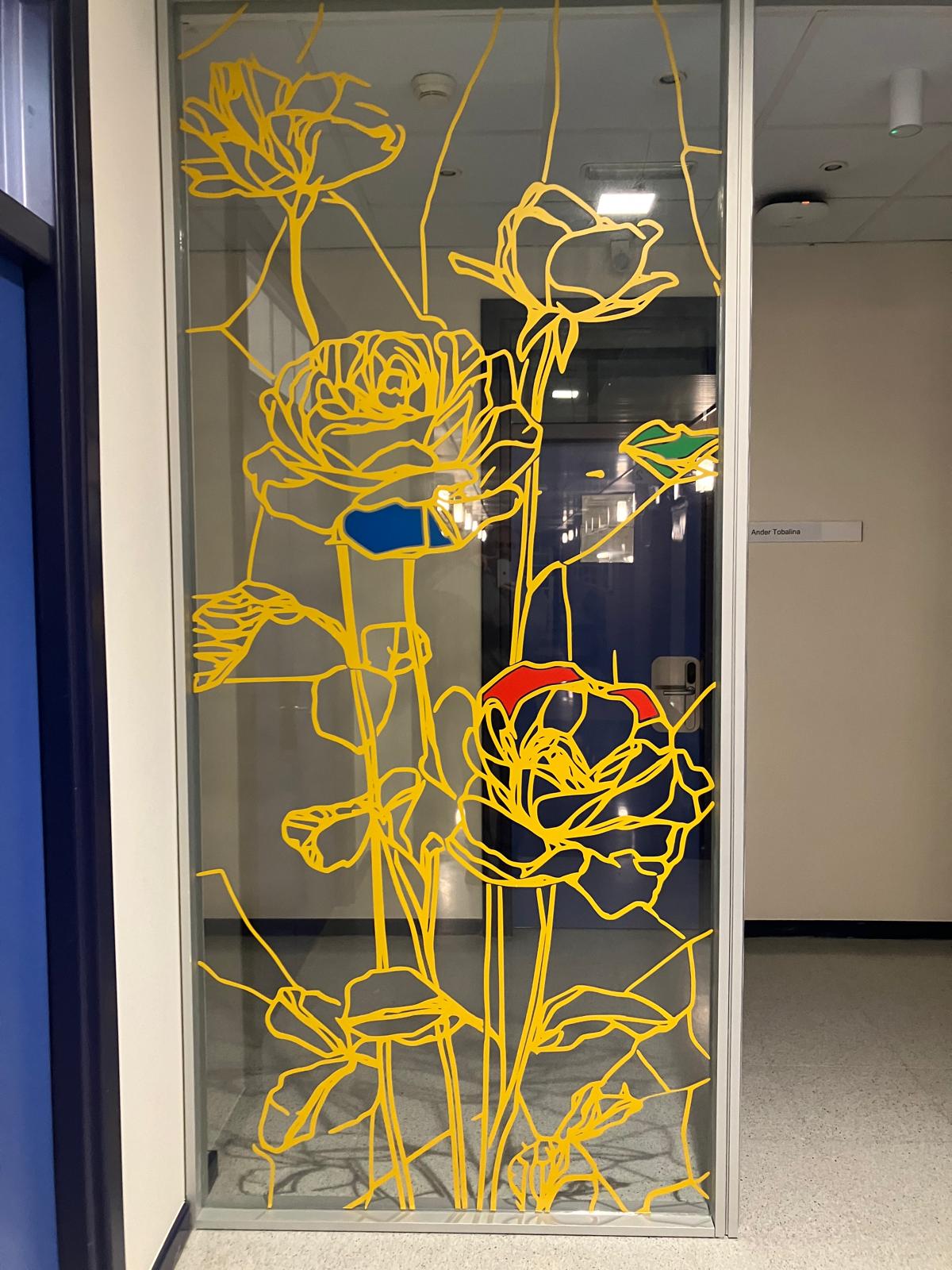
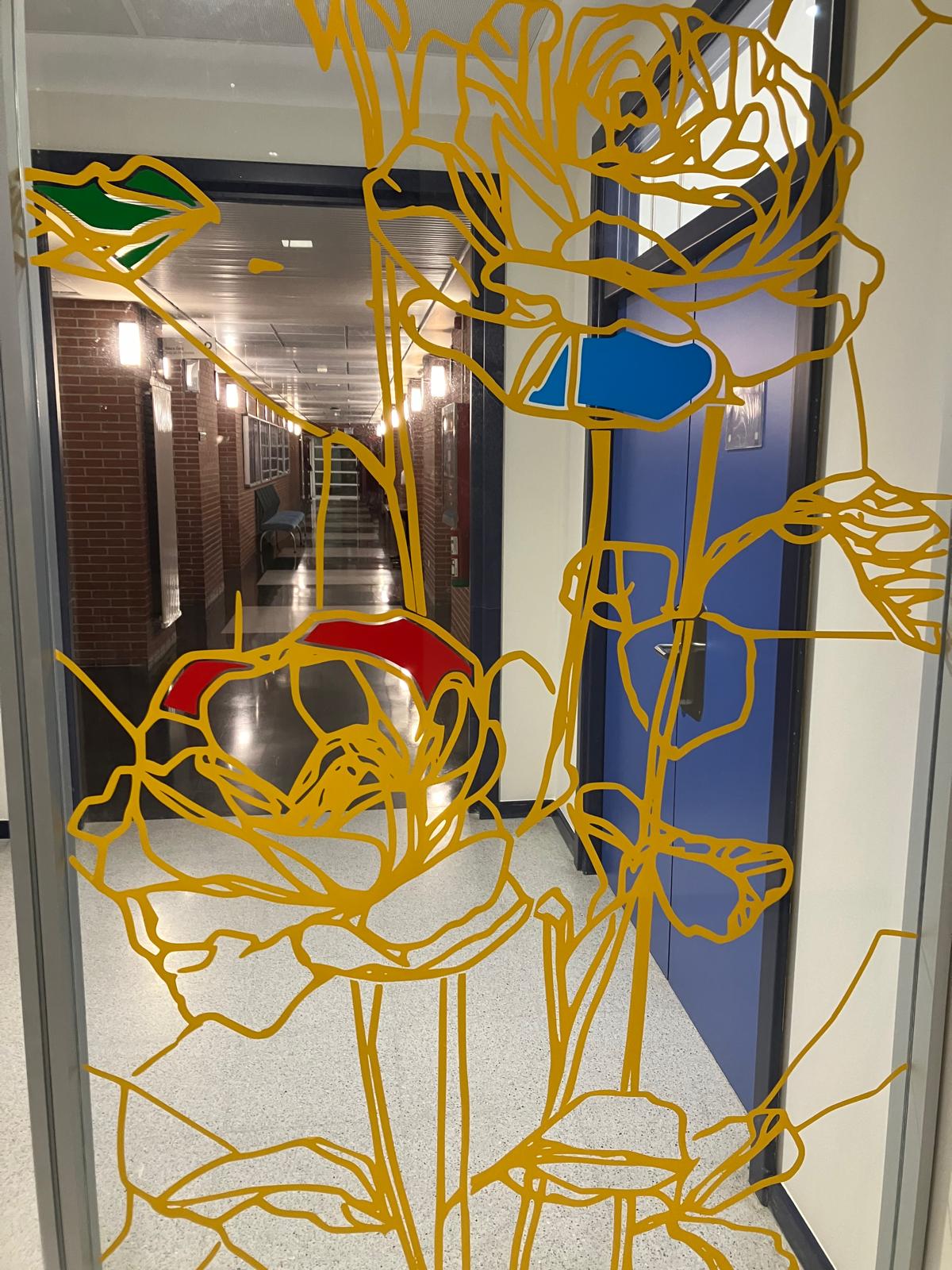
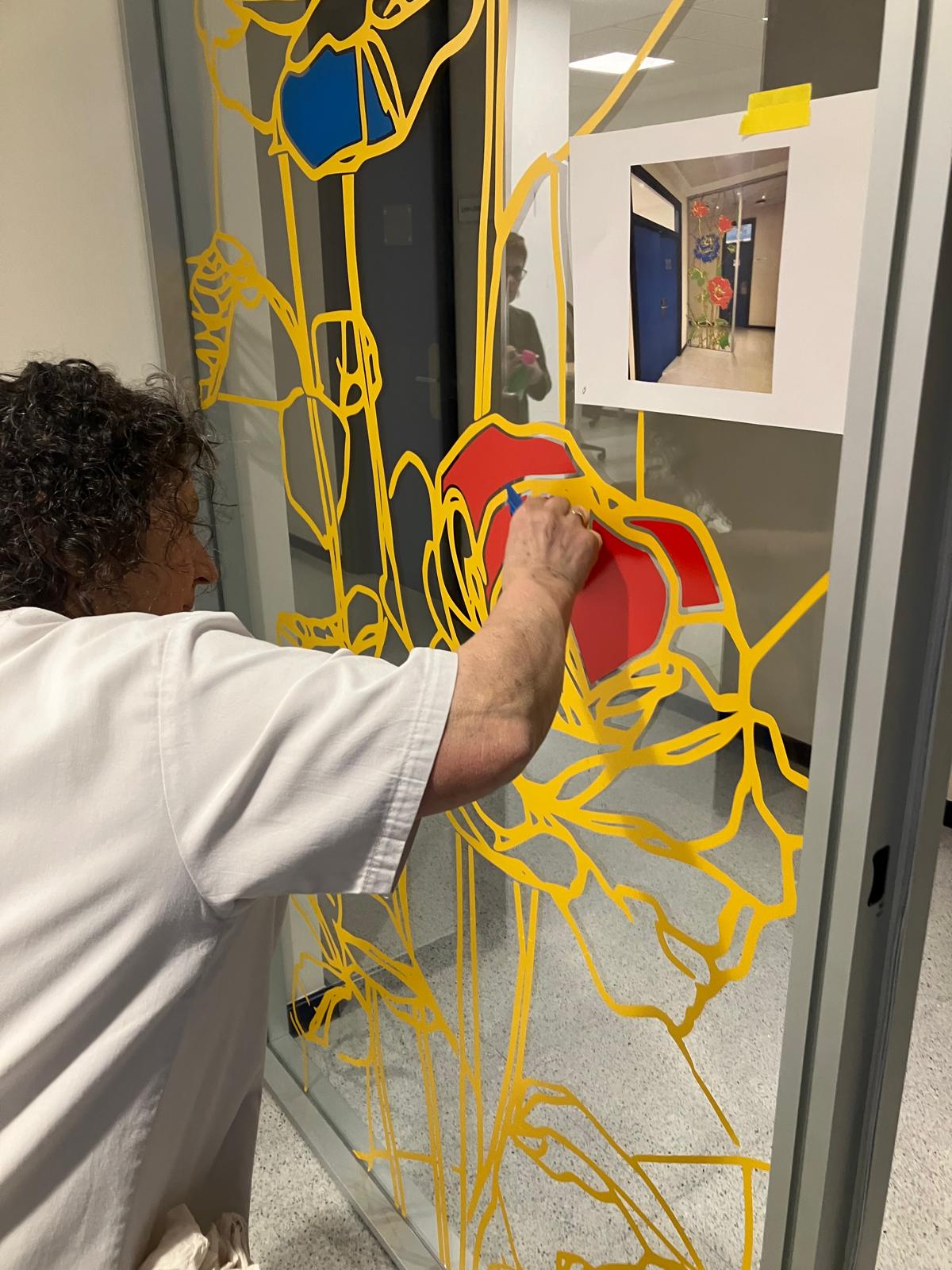
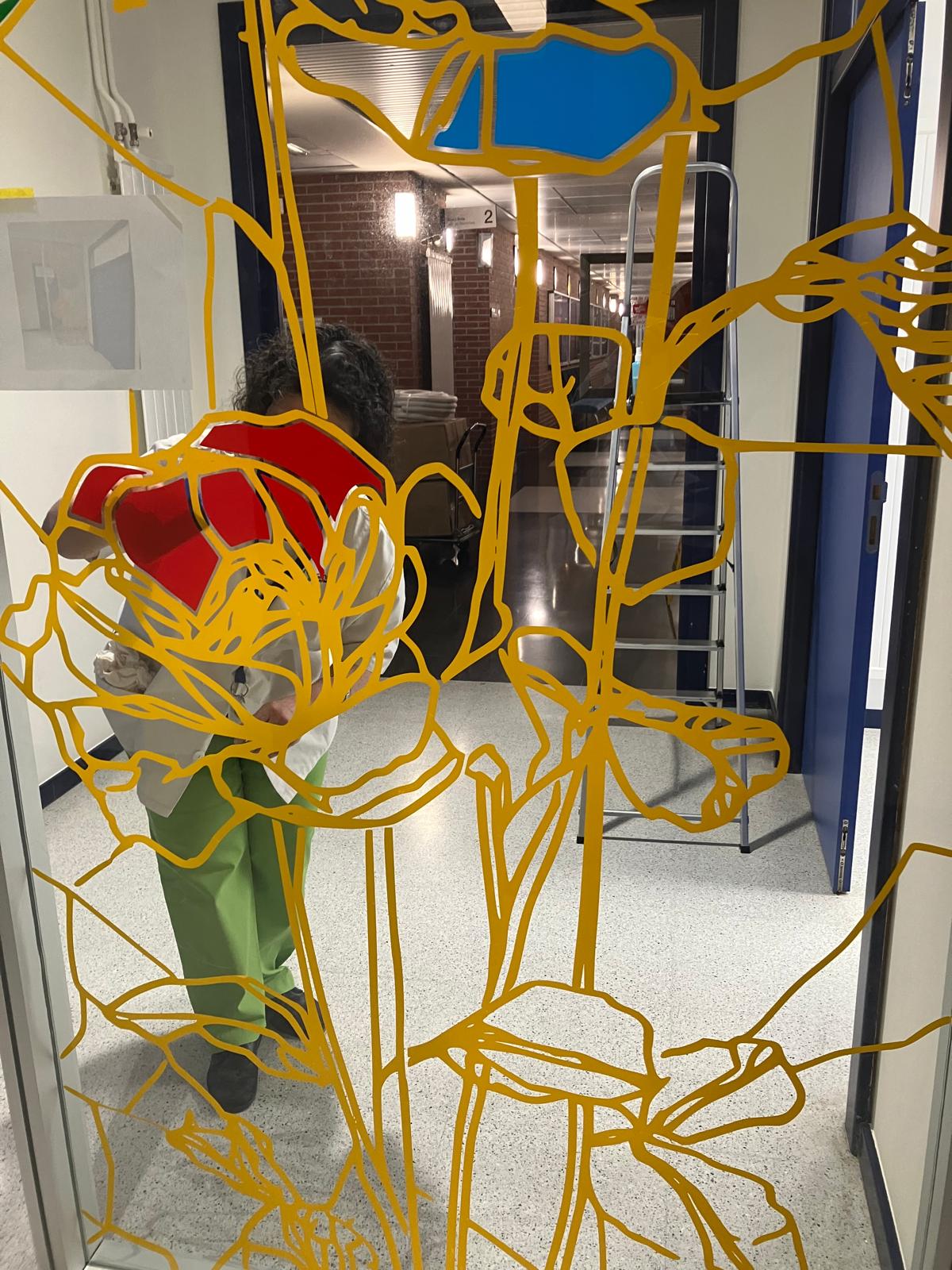
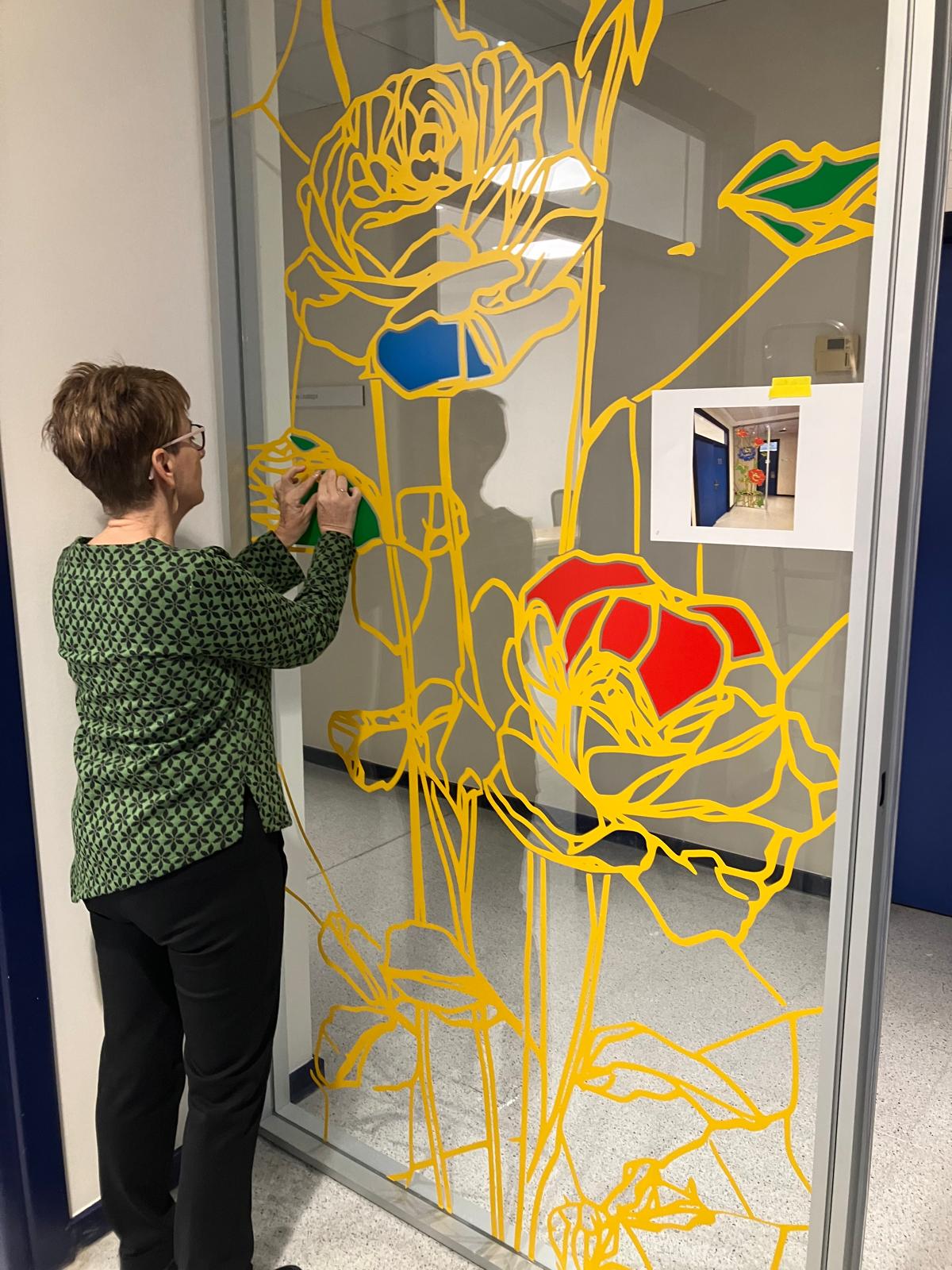
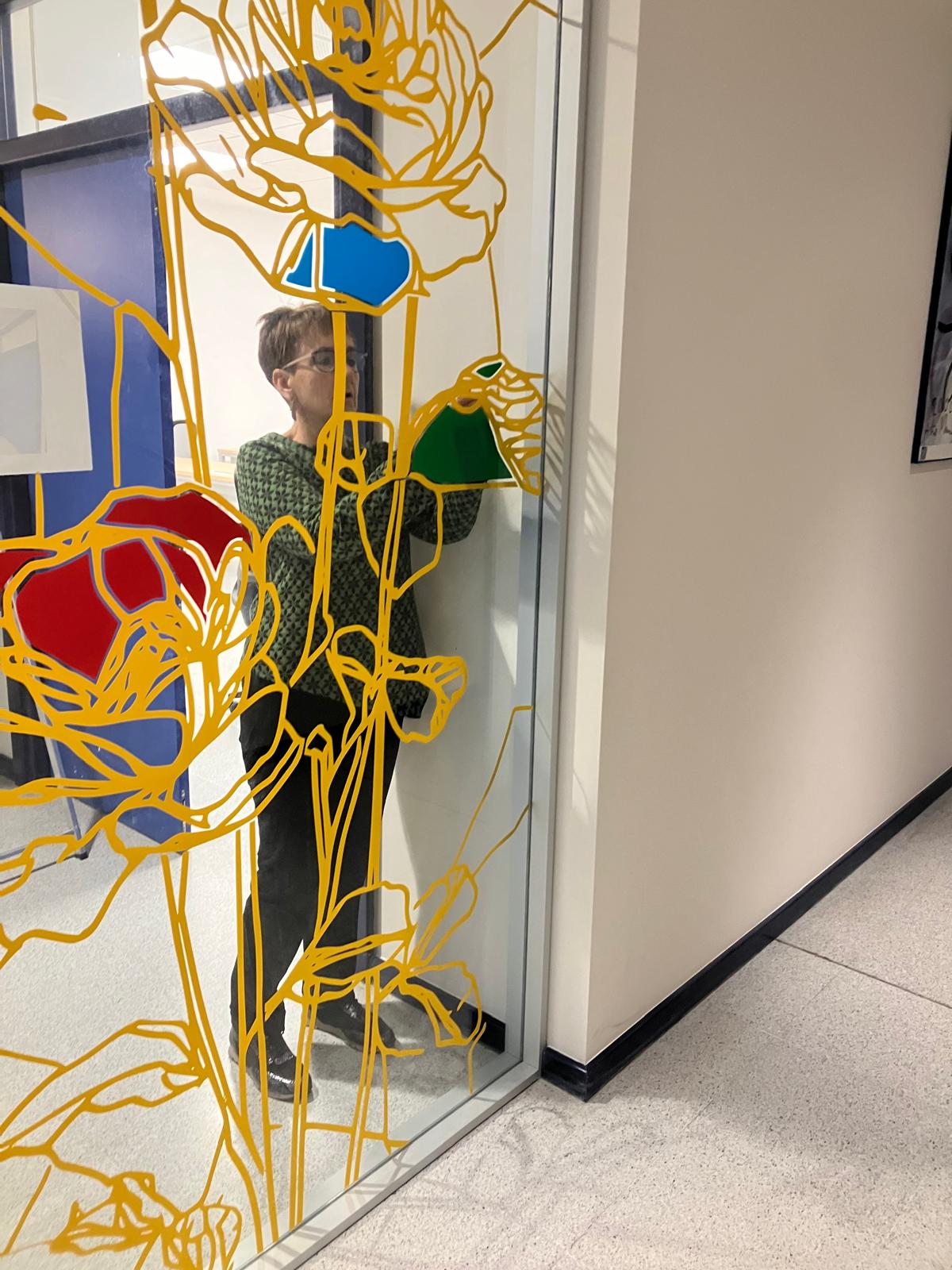
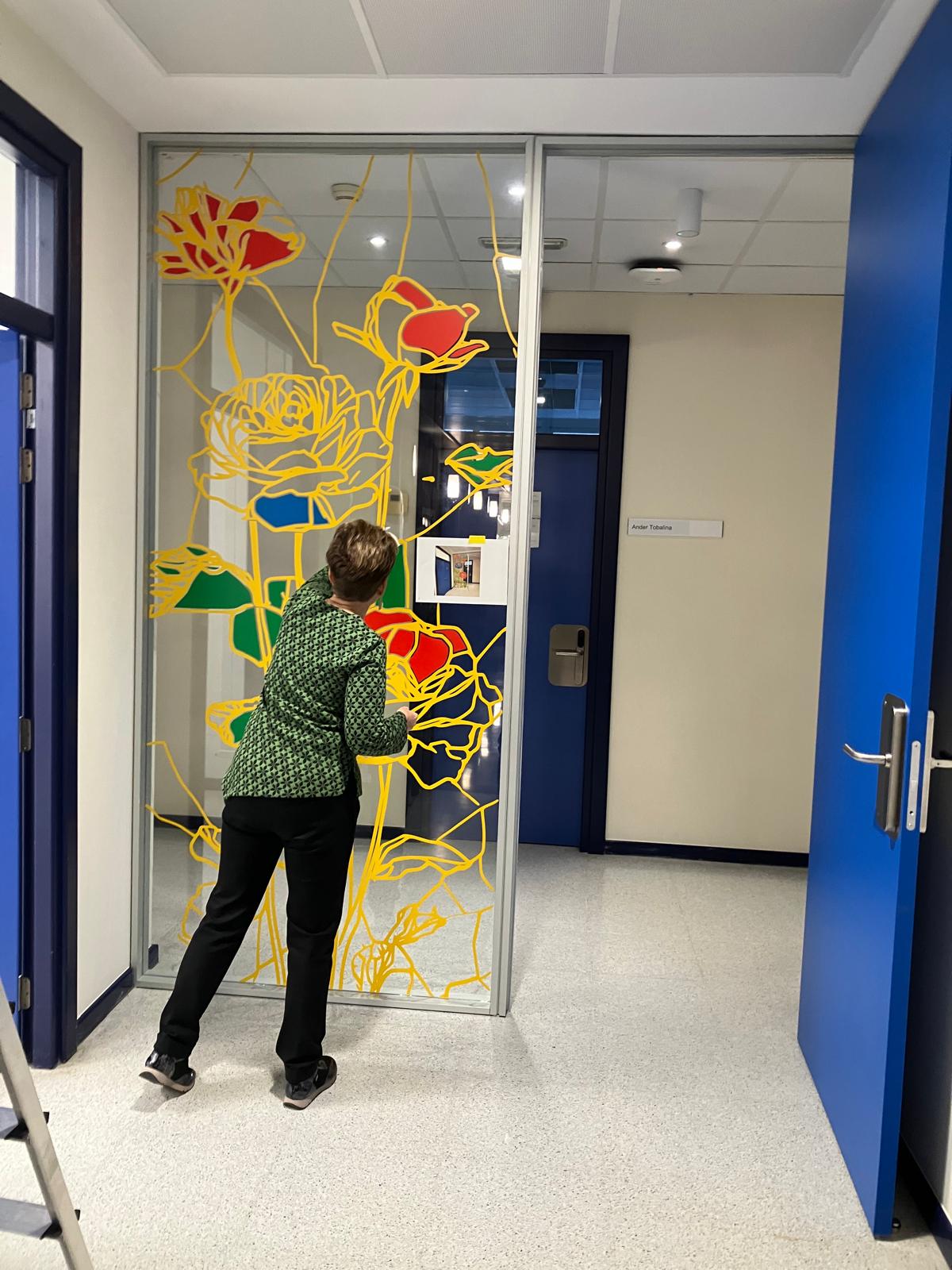
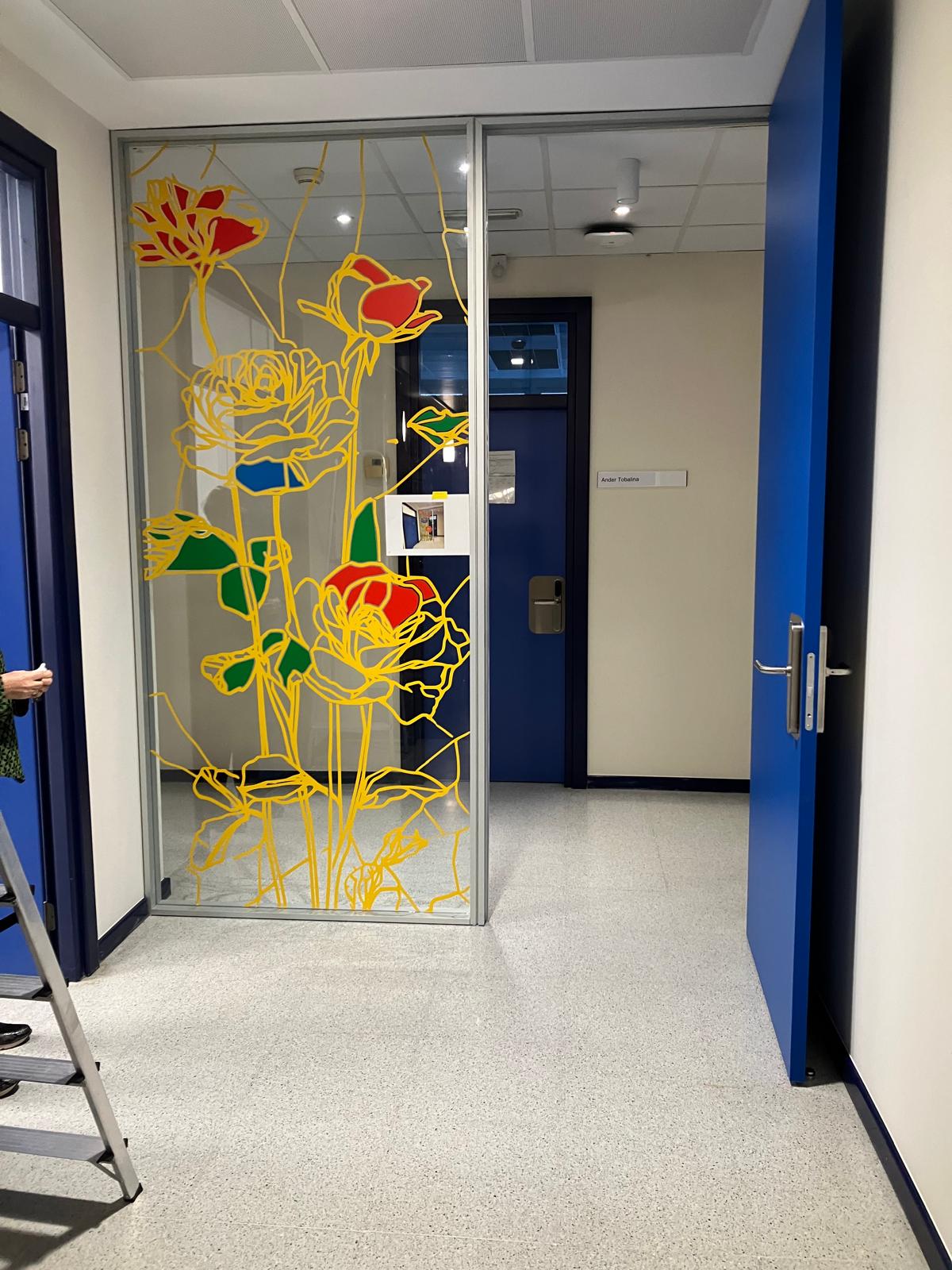
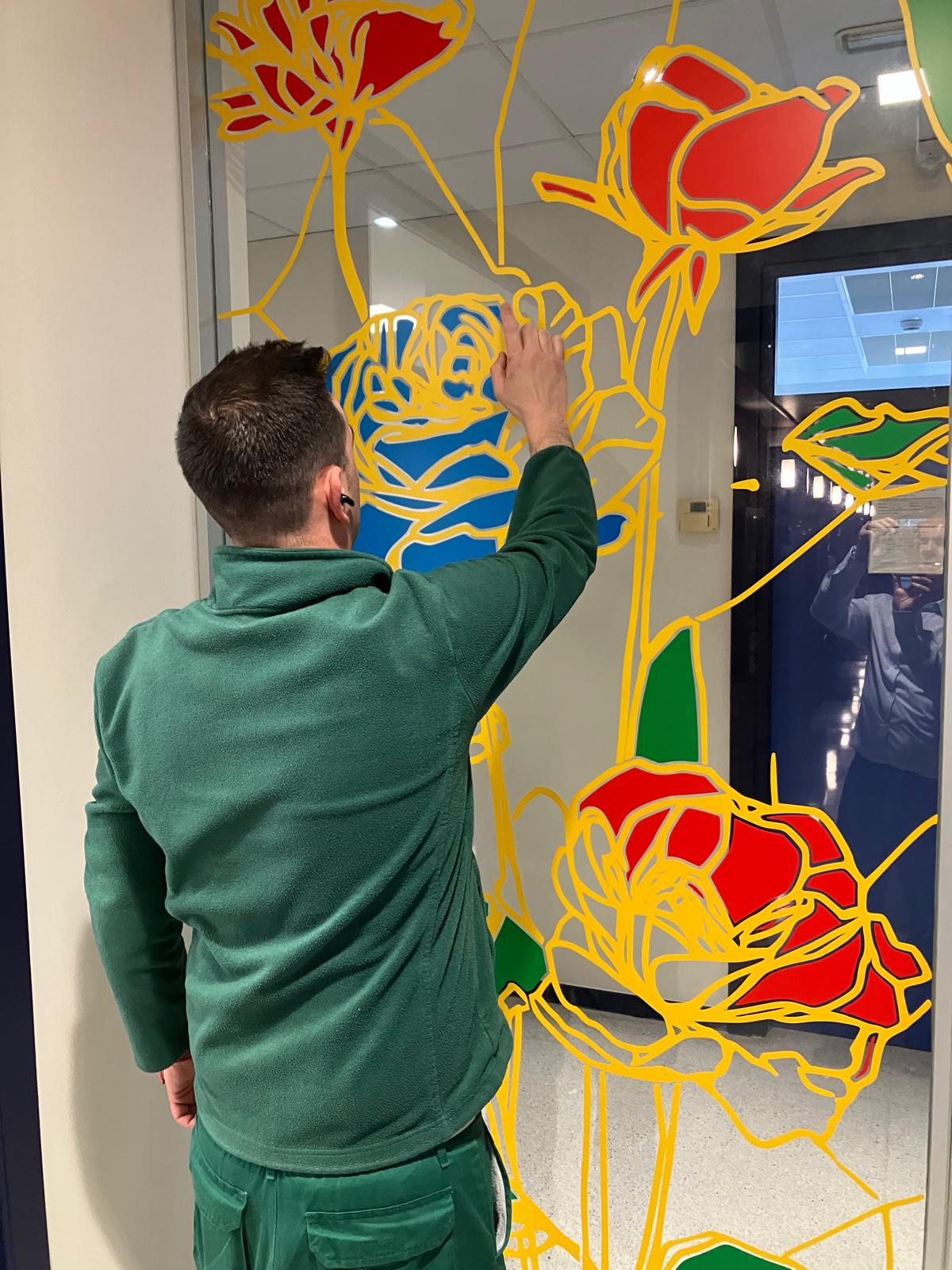
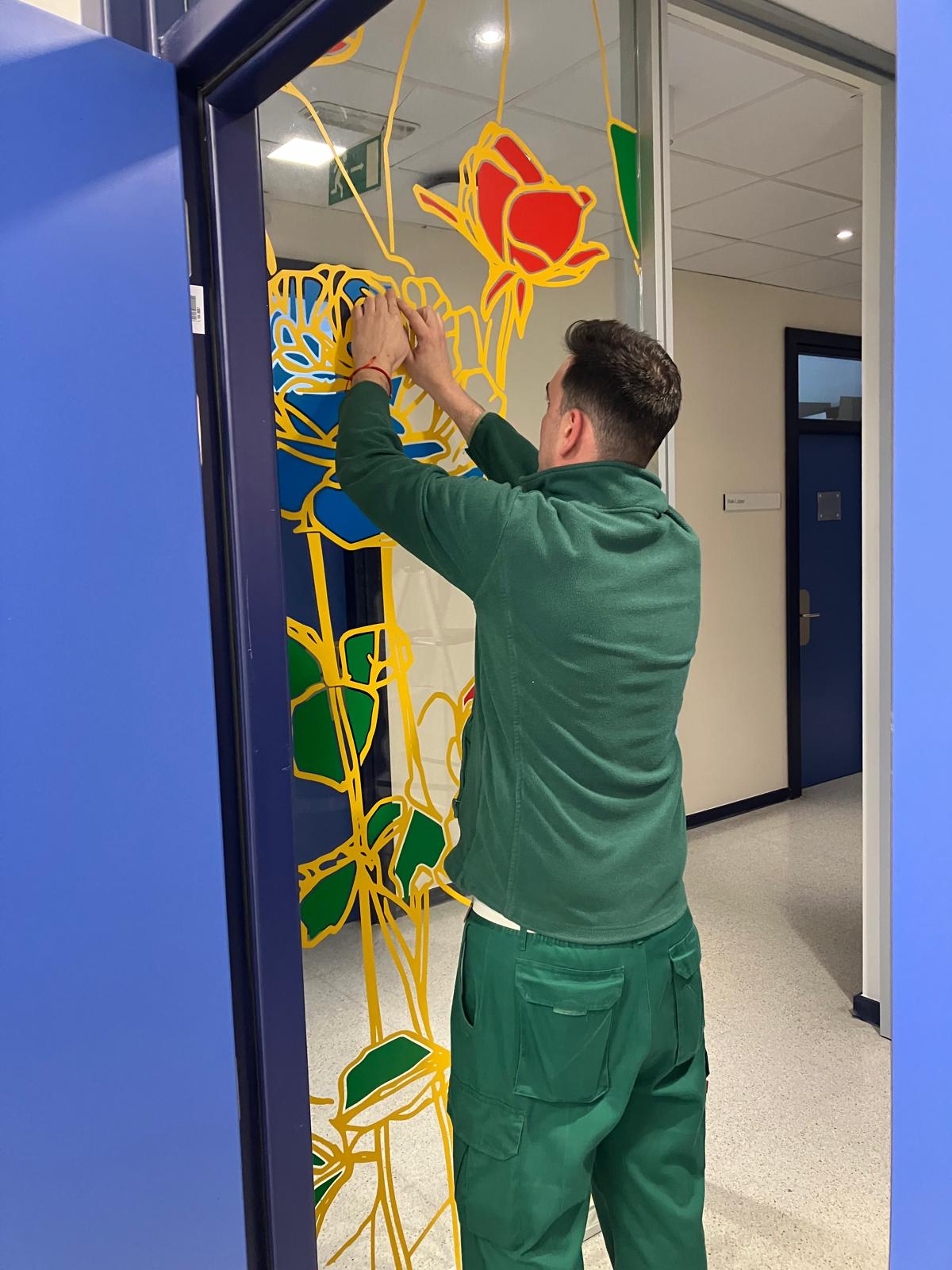
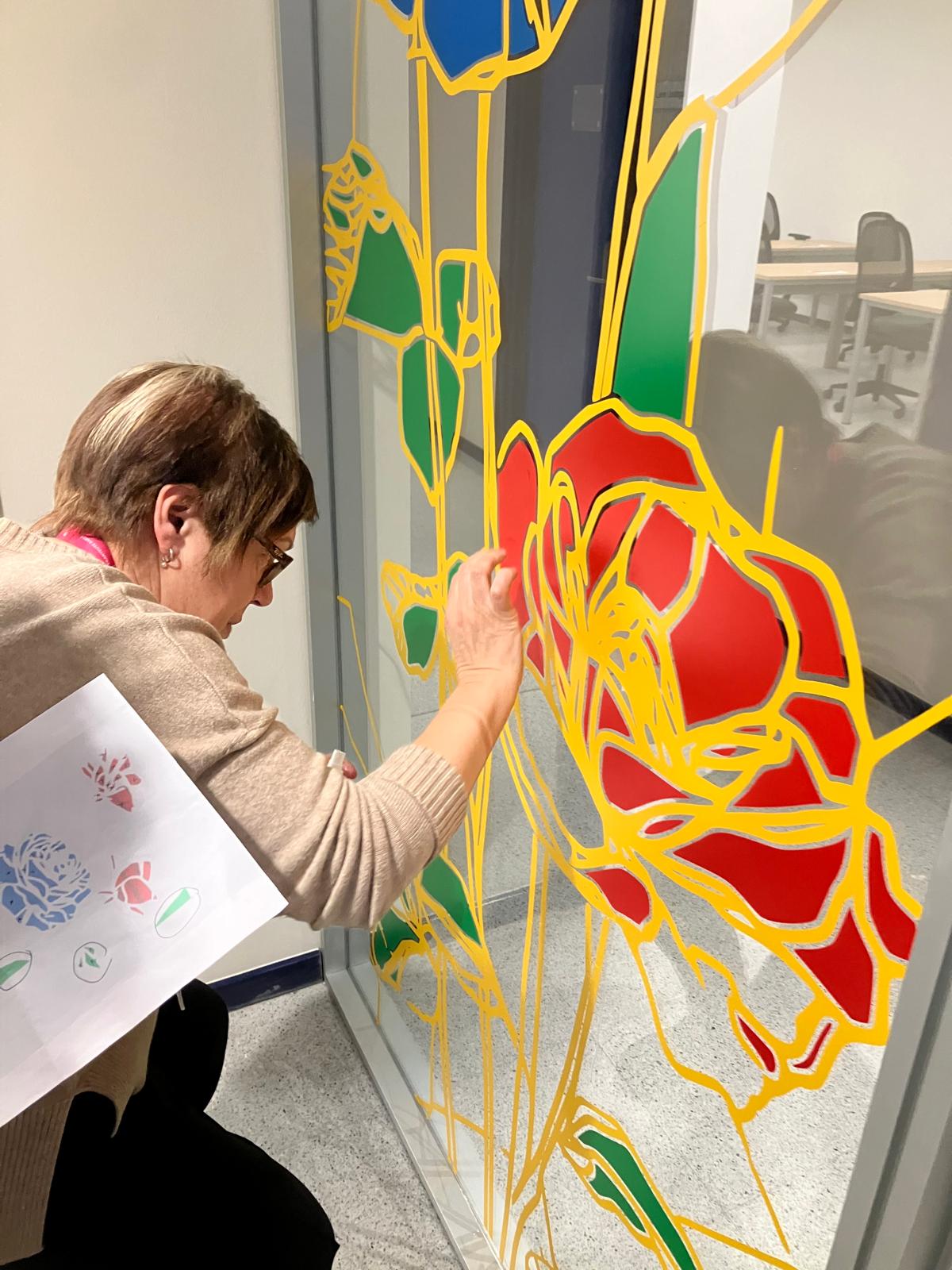
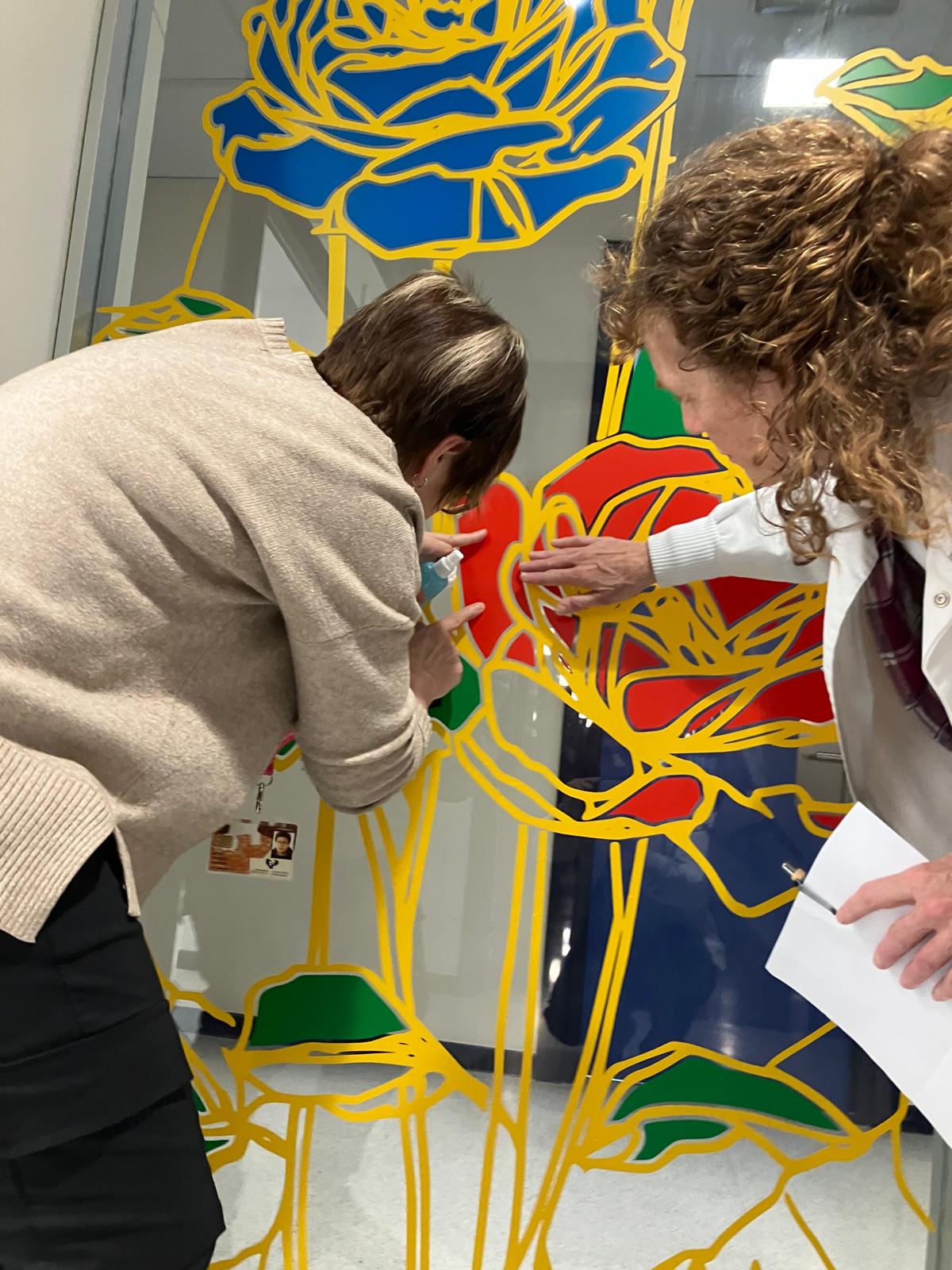
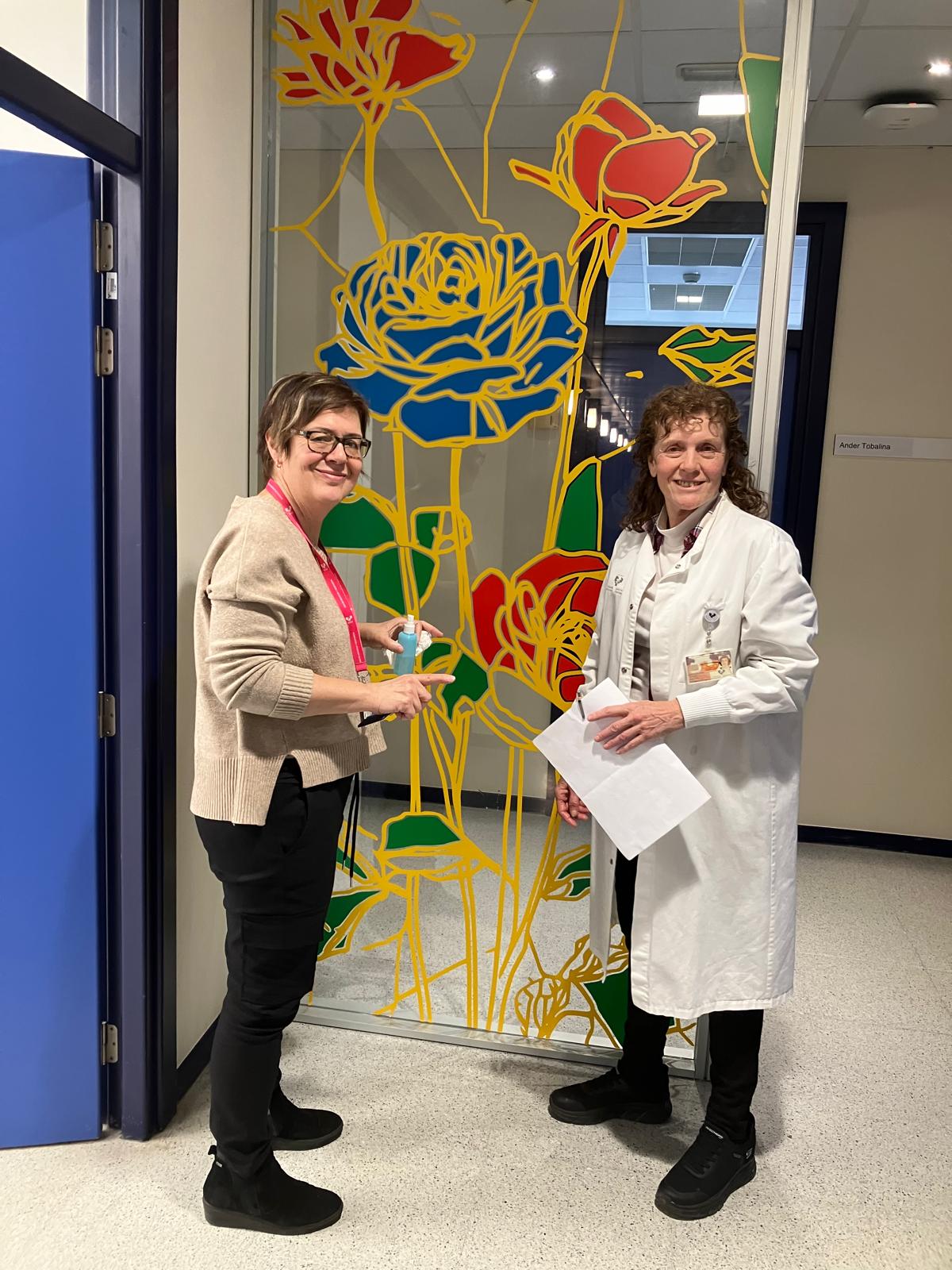
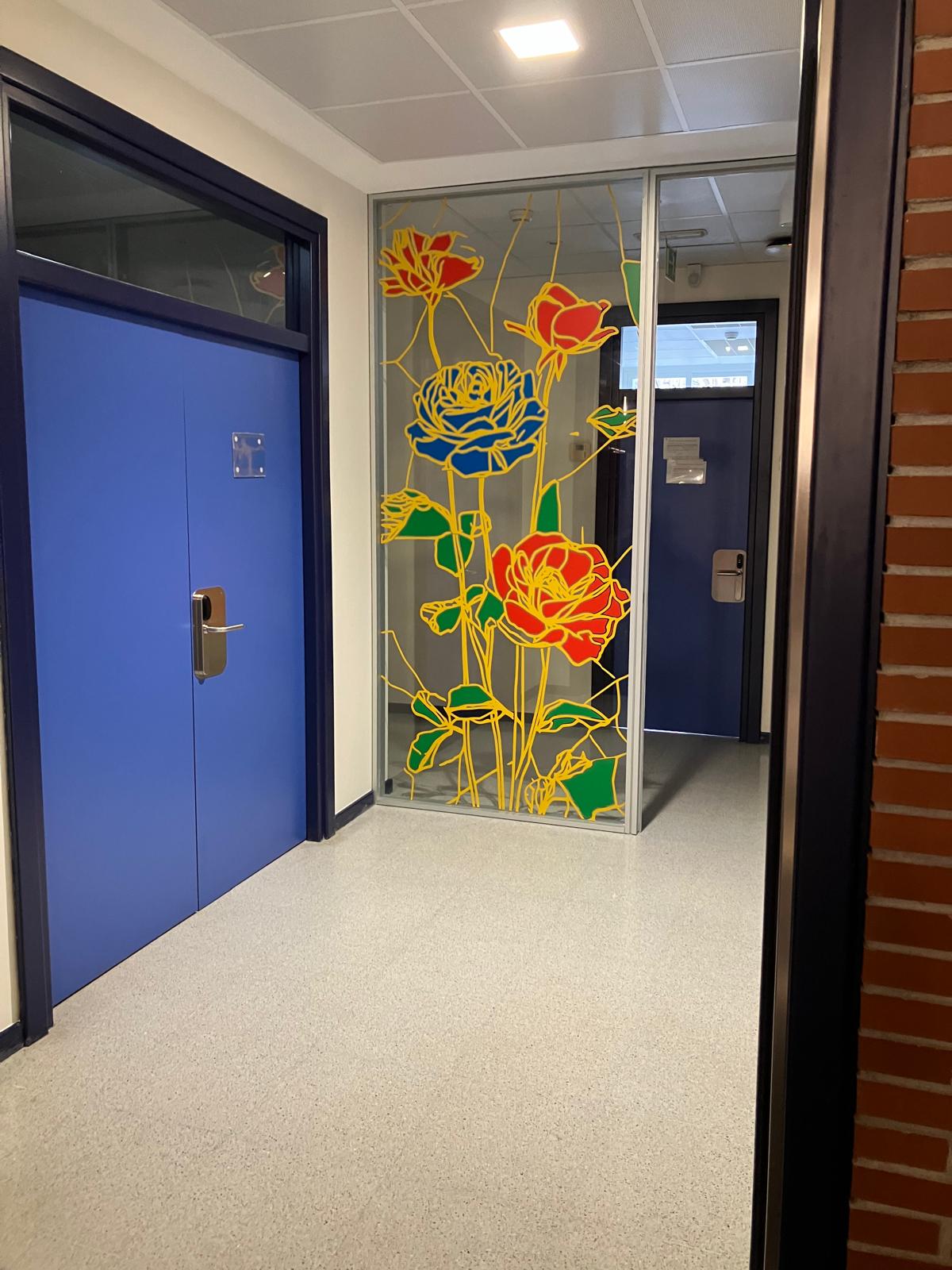
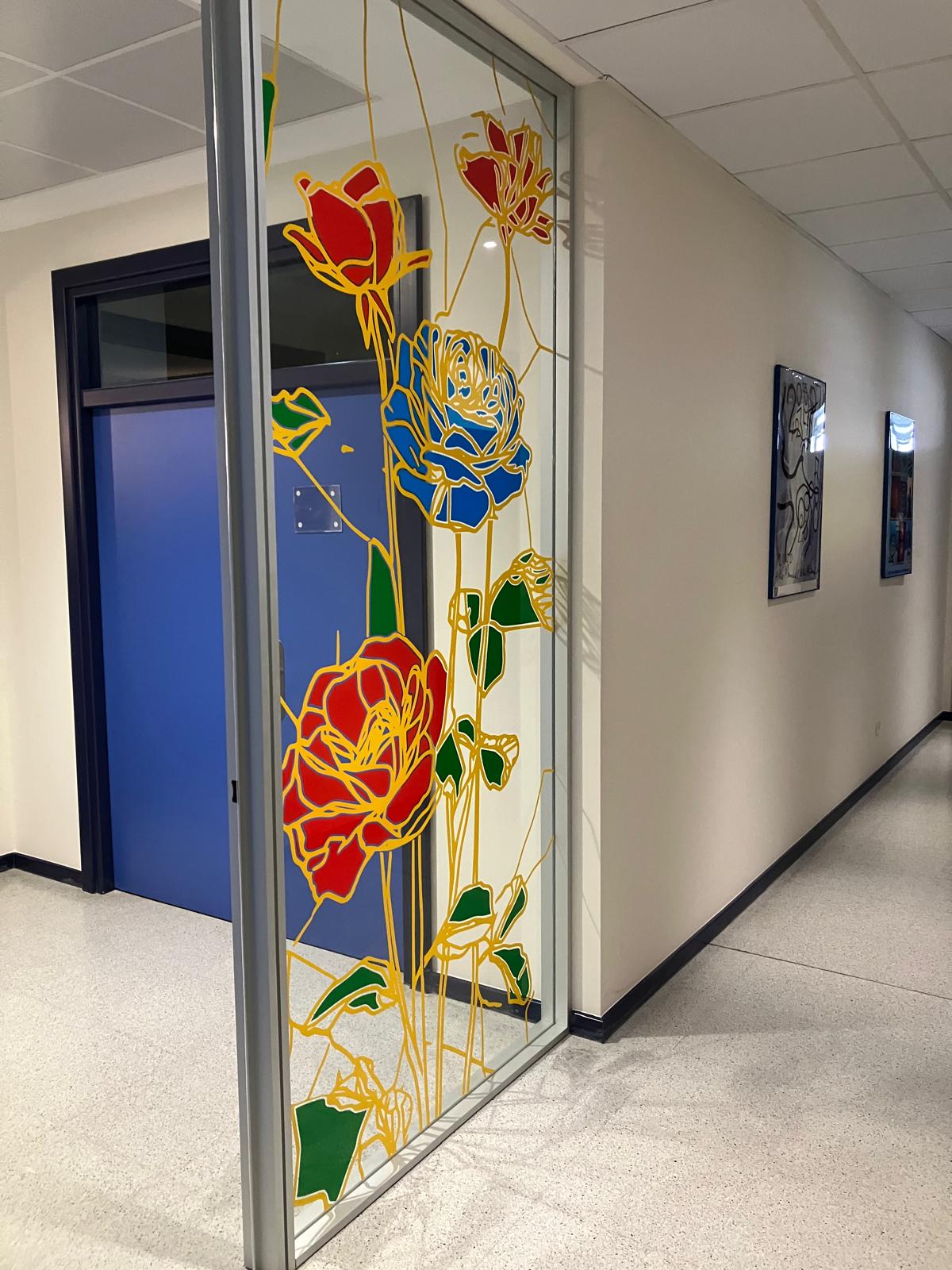
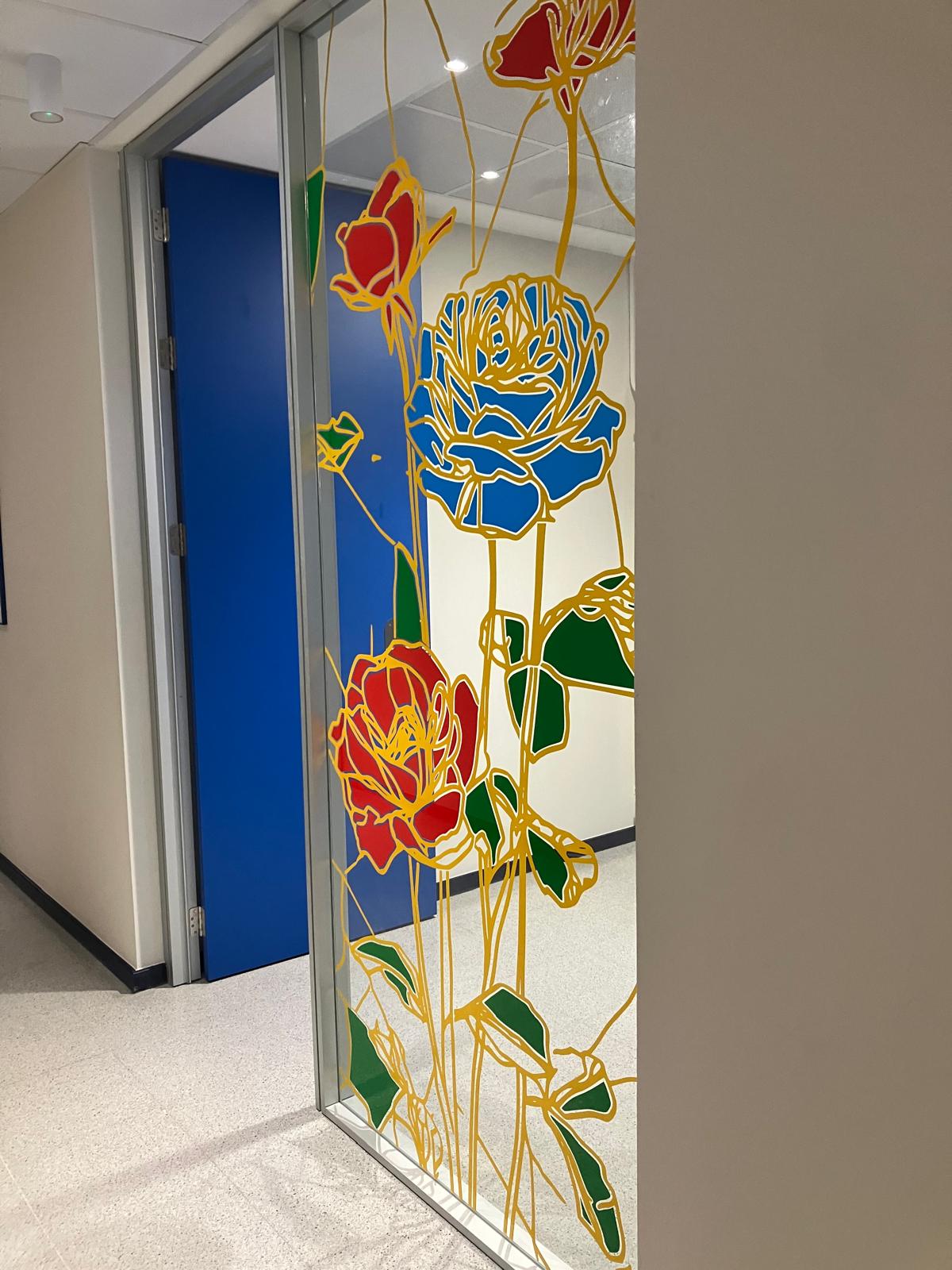
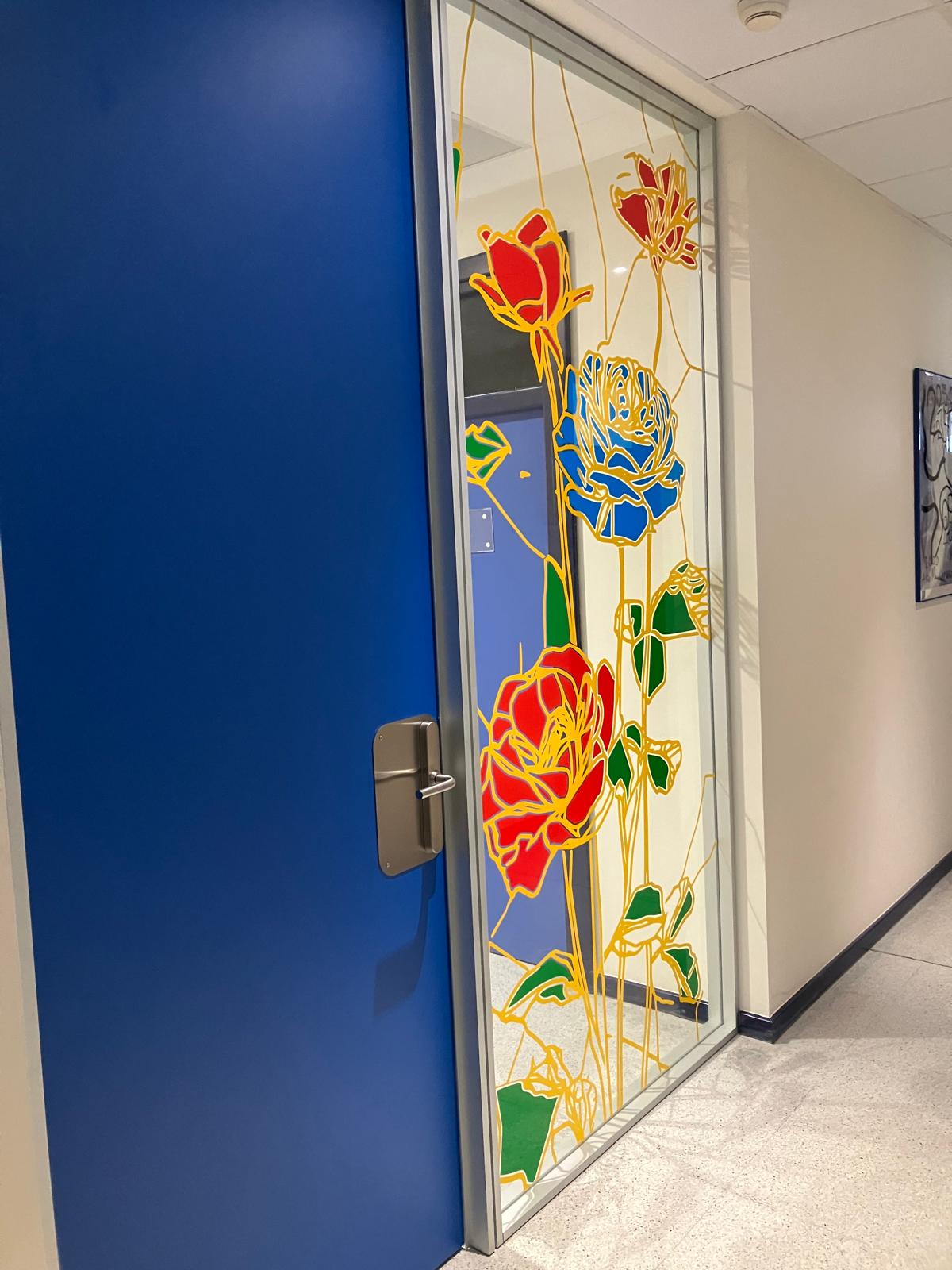
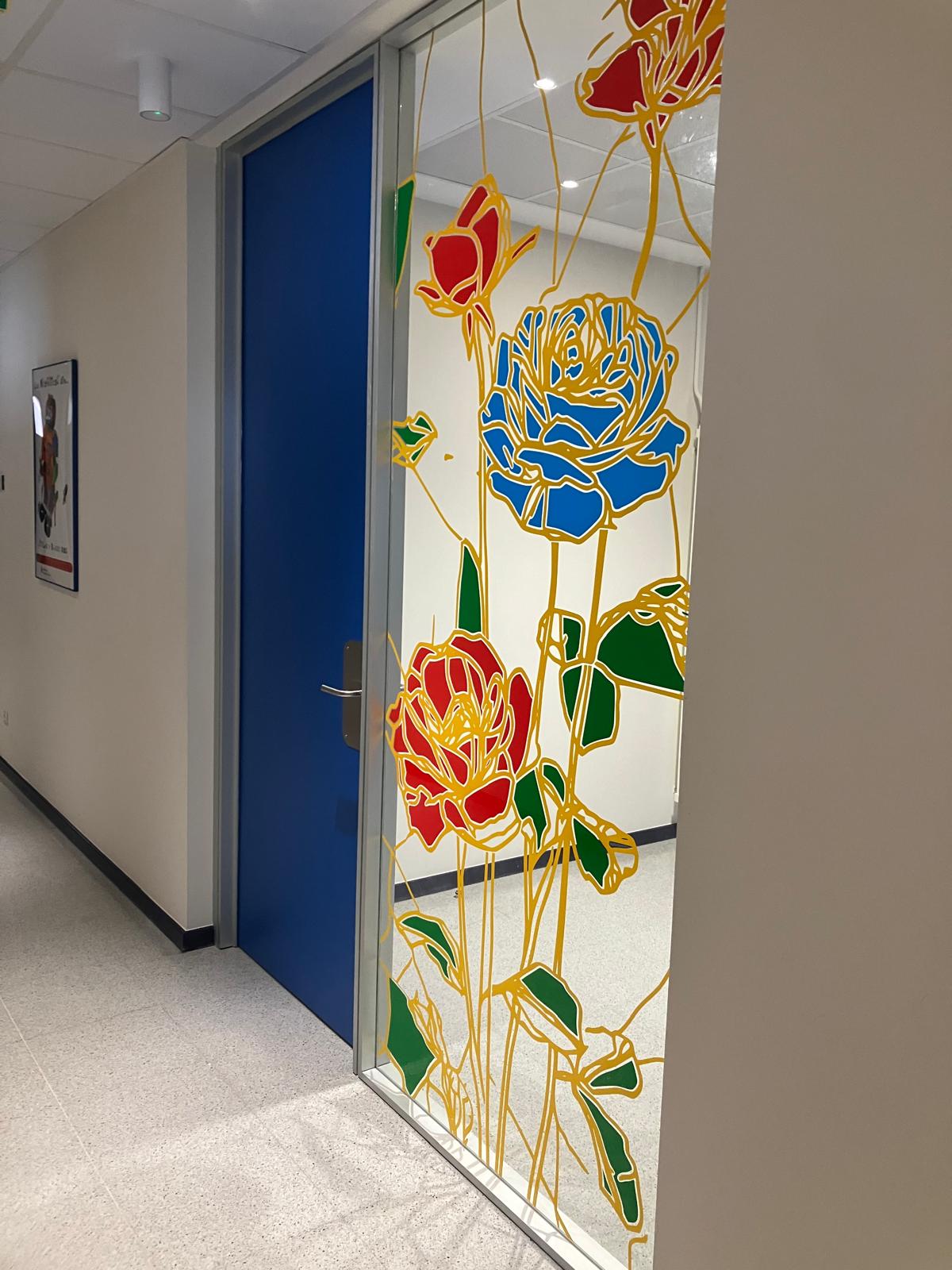
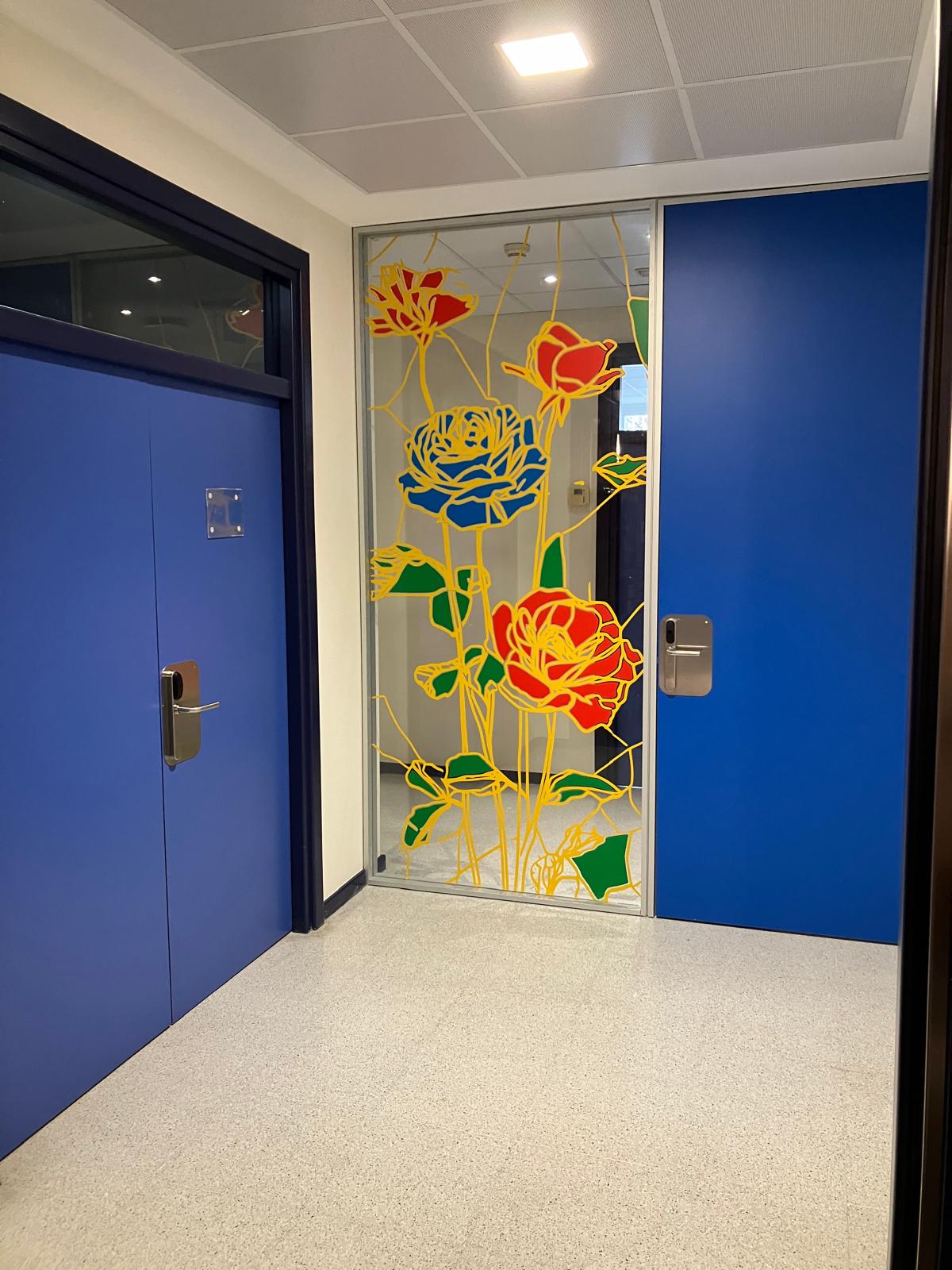
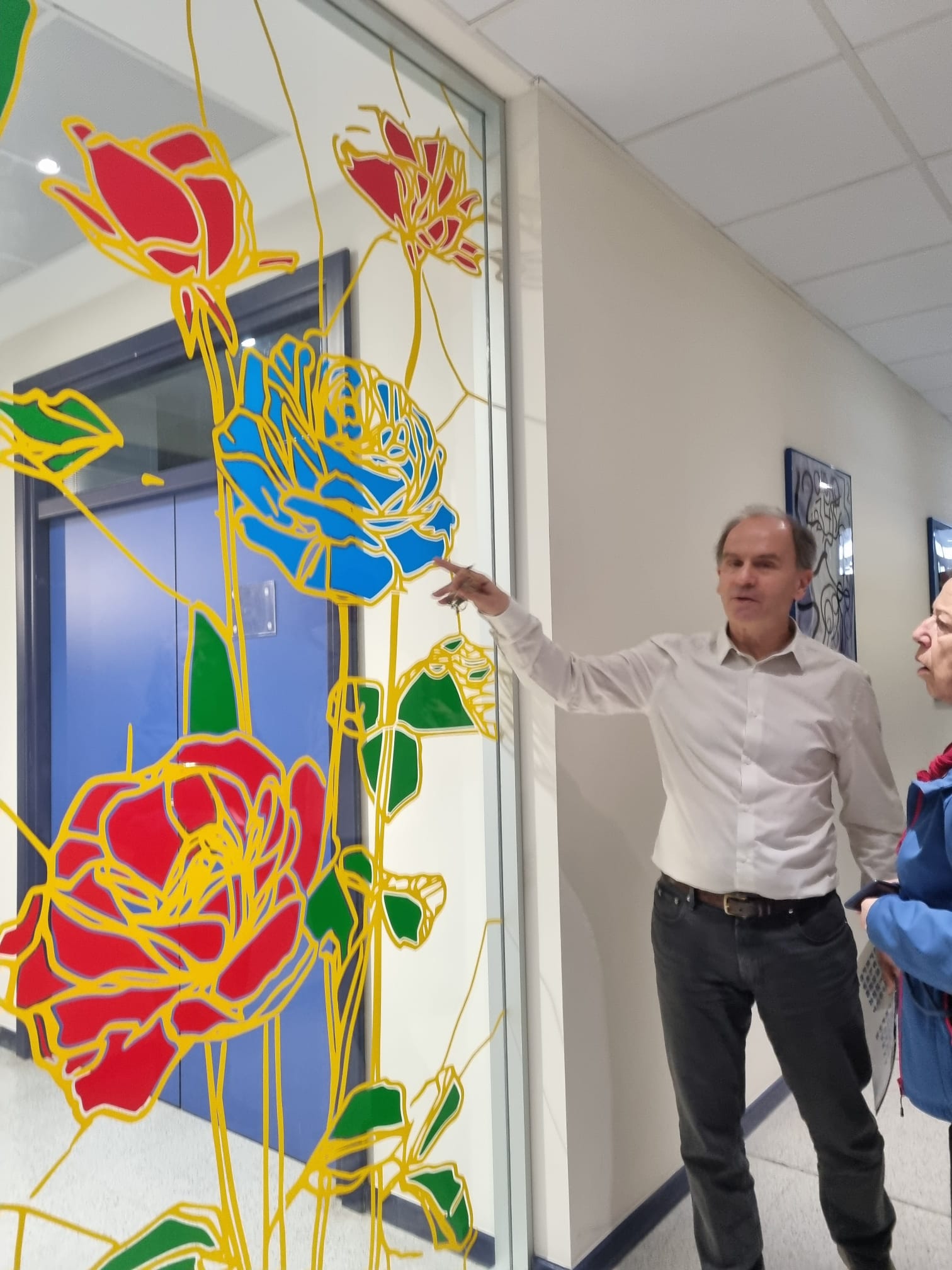
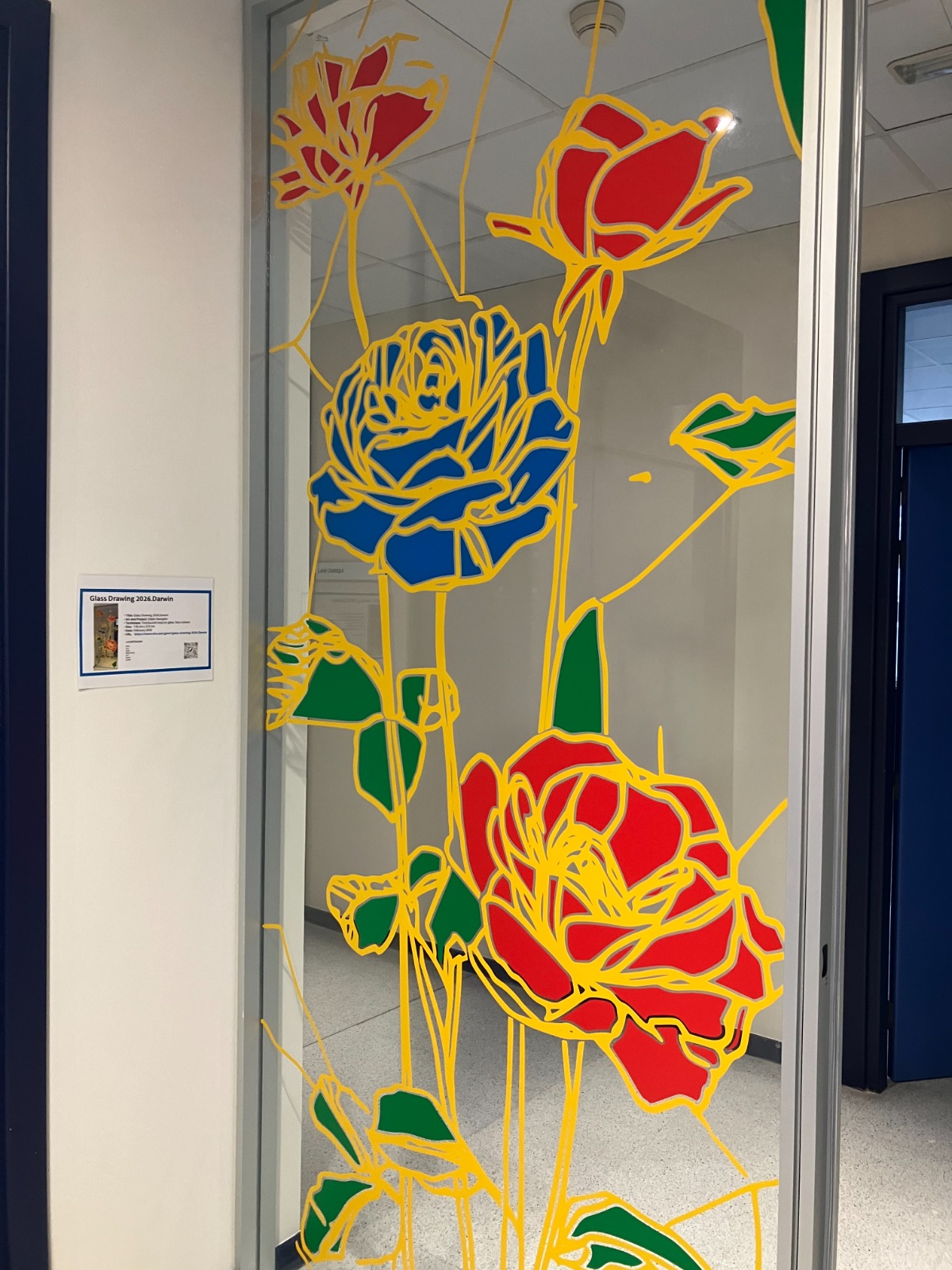
The artwork consists of a mural created with translucent vinyl on glass, composed of four basic colors, applied to a surface measuring 118 × 275 cm. The main motif is a set of four large-format flowers, represented in an abstract and essential style, reducing form to what is strictly necessary to enhance the visual impact of color and line.
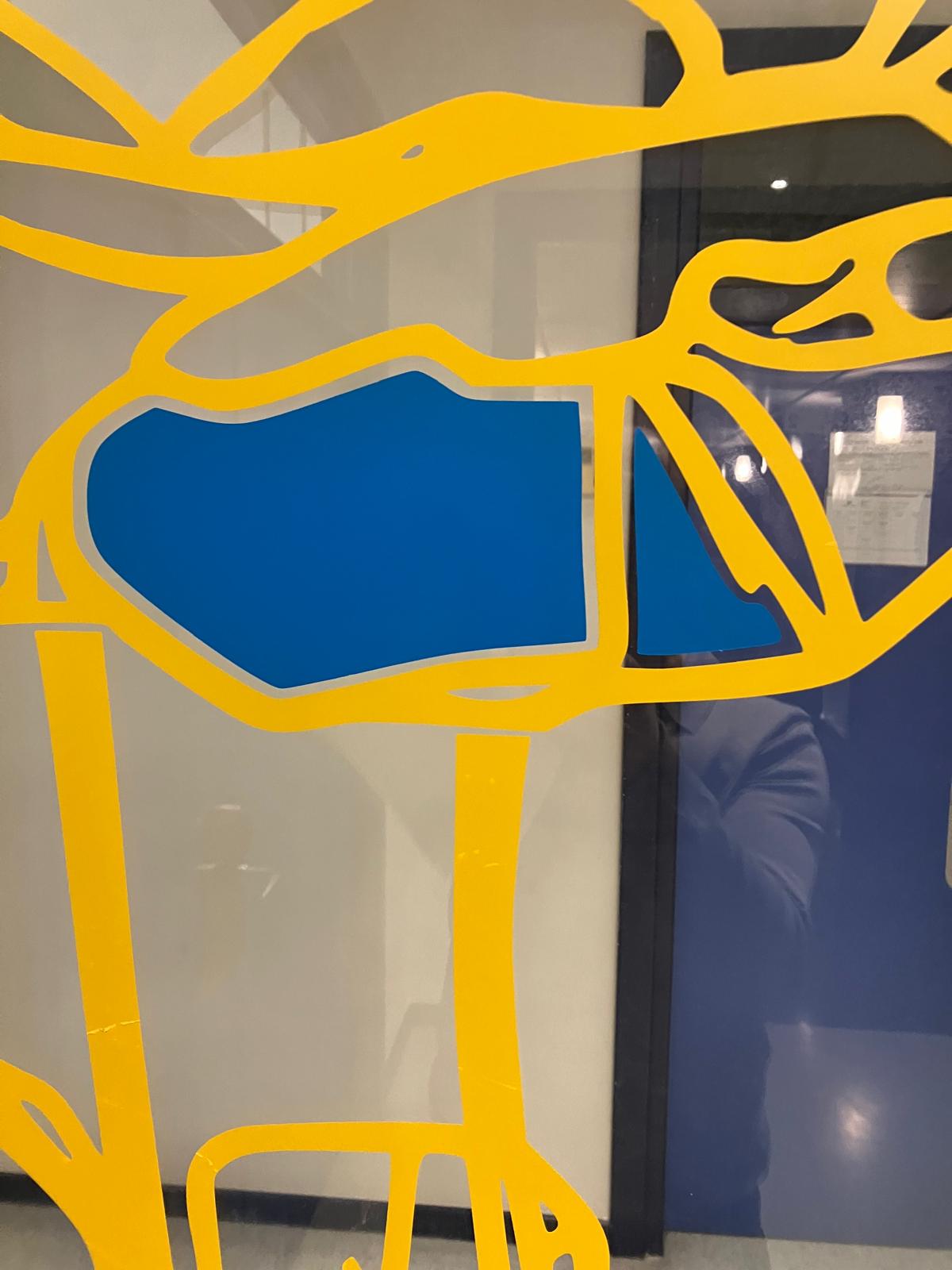
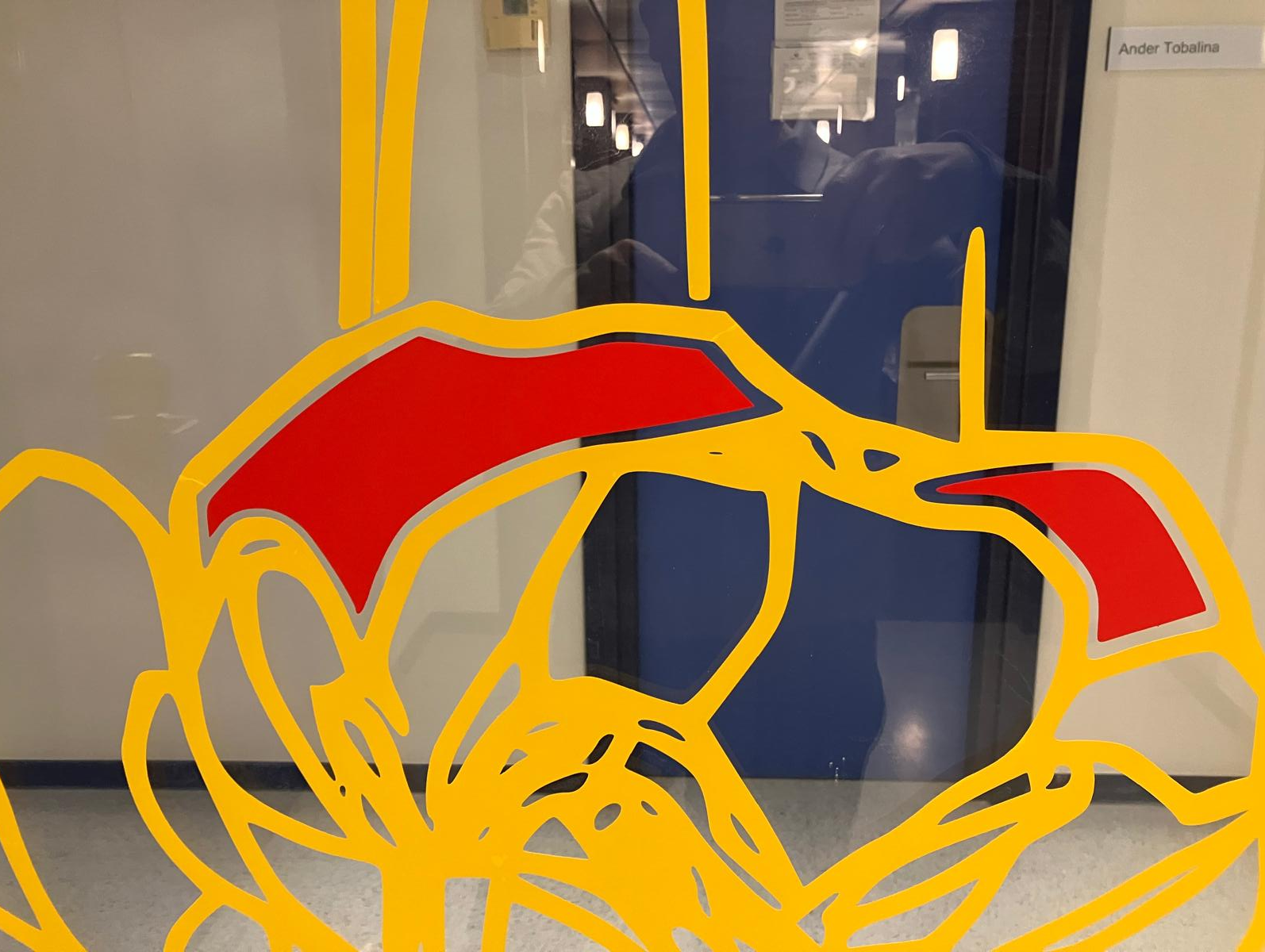
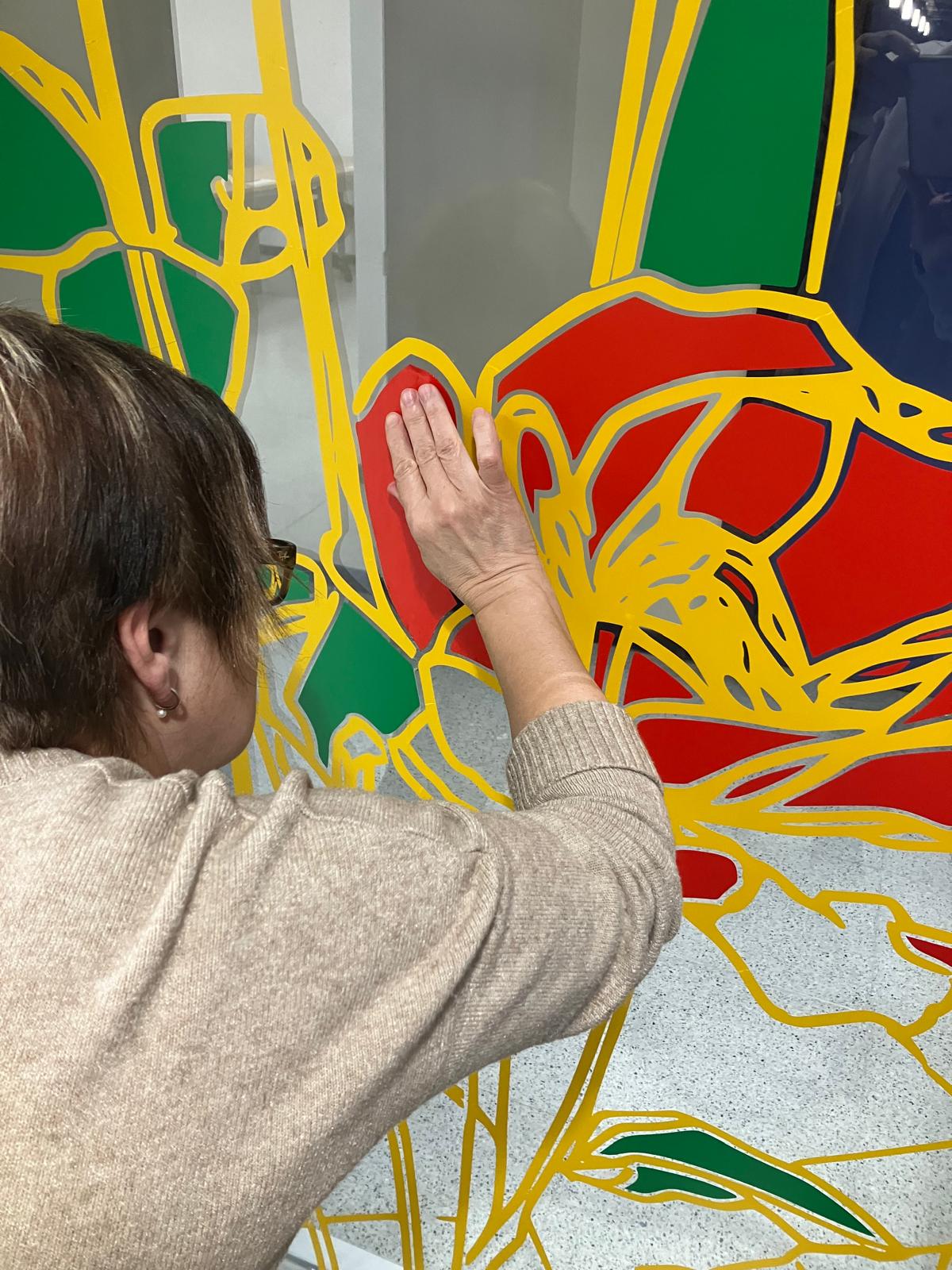
Each flower is constructed from petals of a flat color, without gradations or textures, while a continuous outline of fine yellow lines runs along and defines the entire composition. This line functions as a visual structure and unifying element, connecting the flowers to one another and giving the whole a sense of rhythm and coherence.
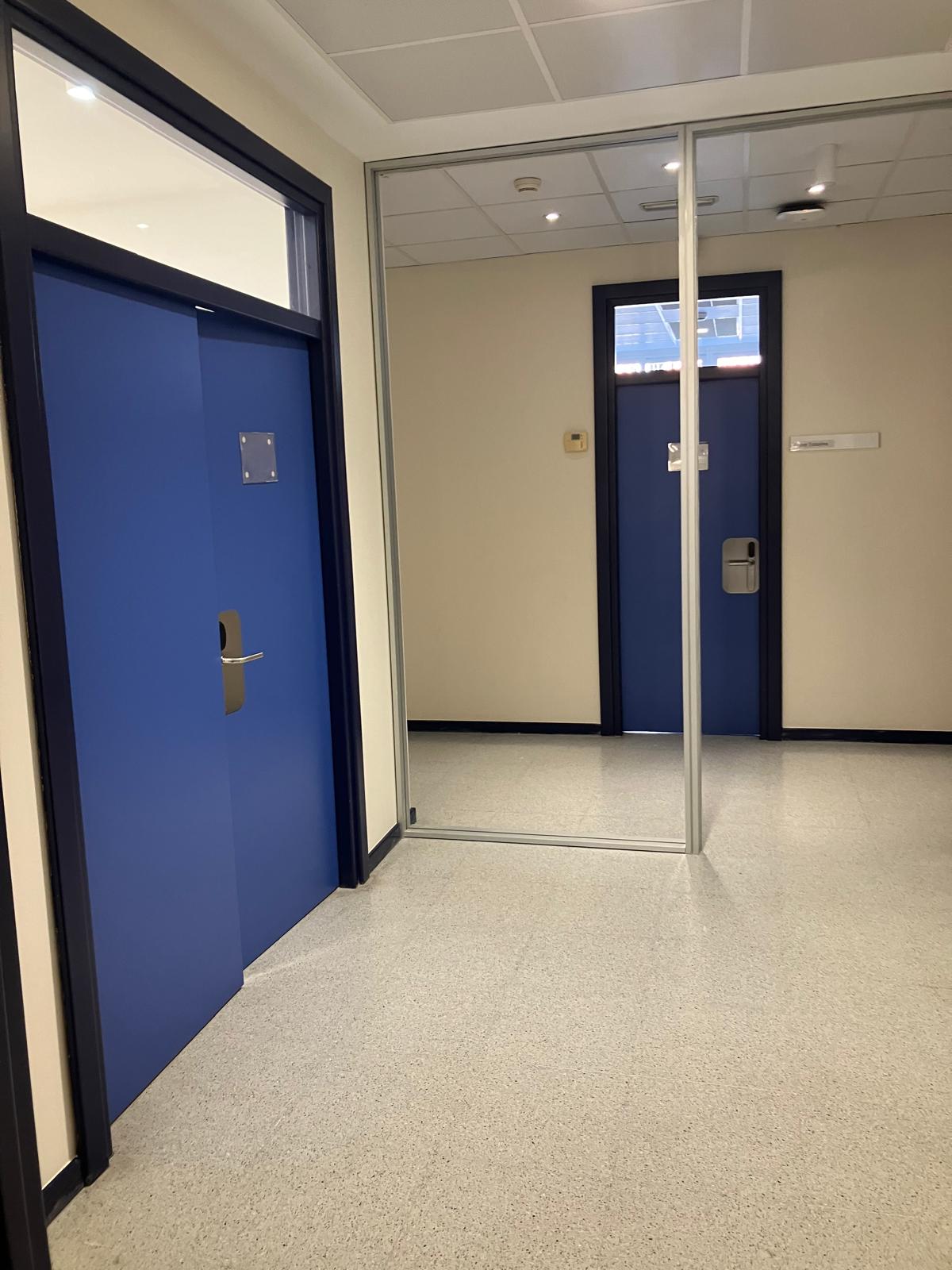
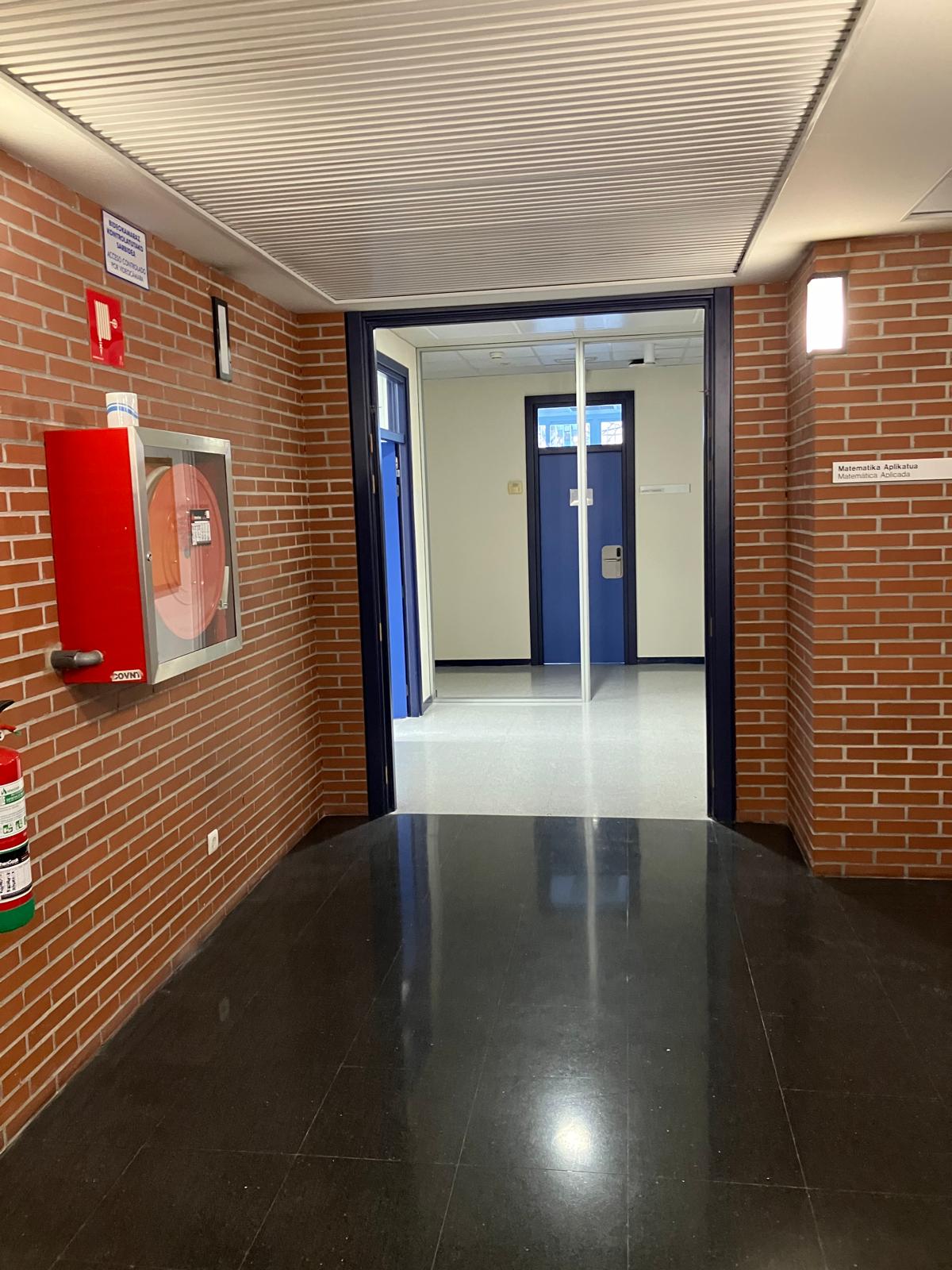
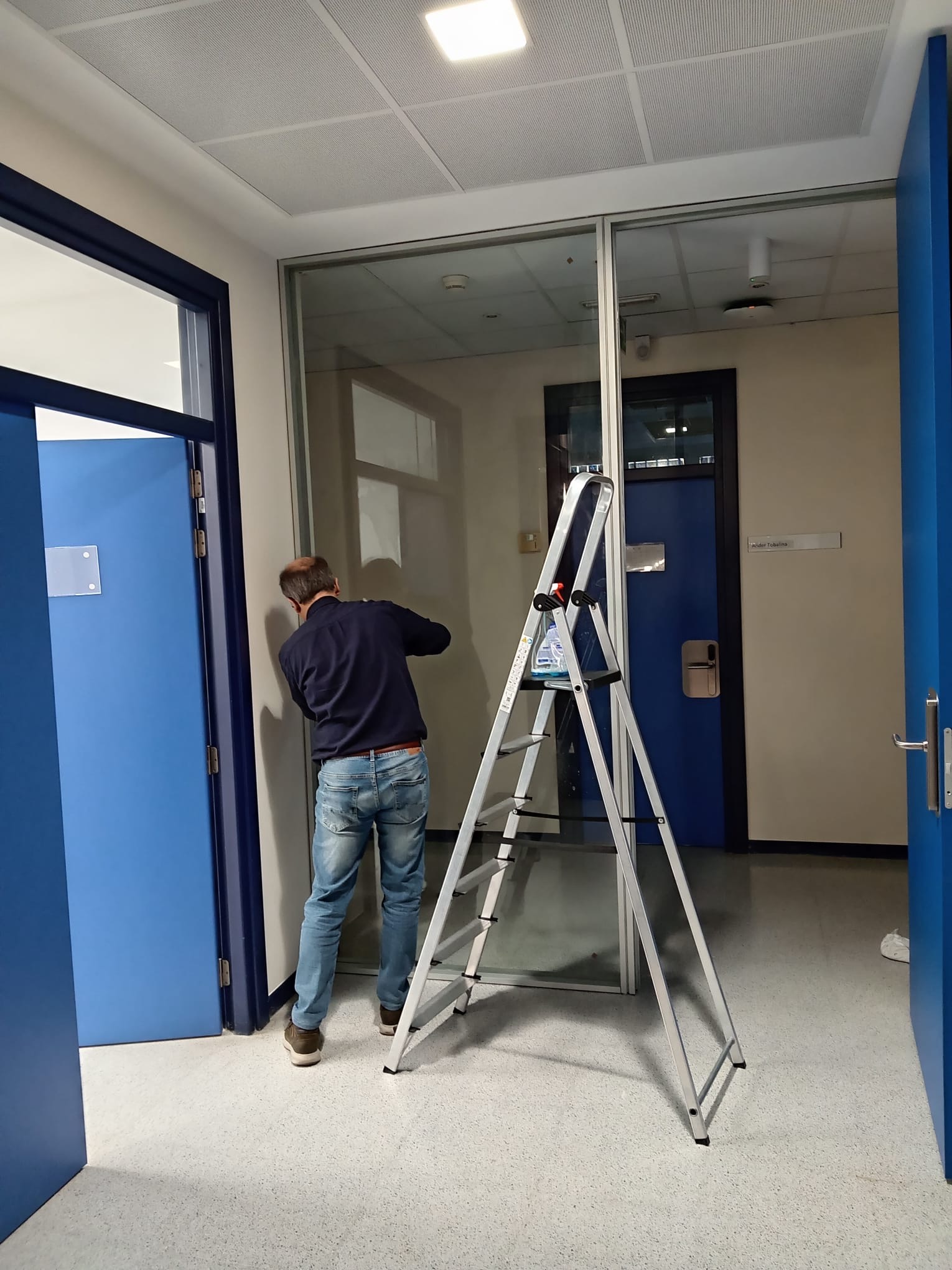
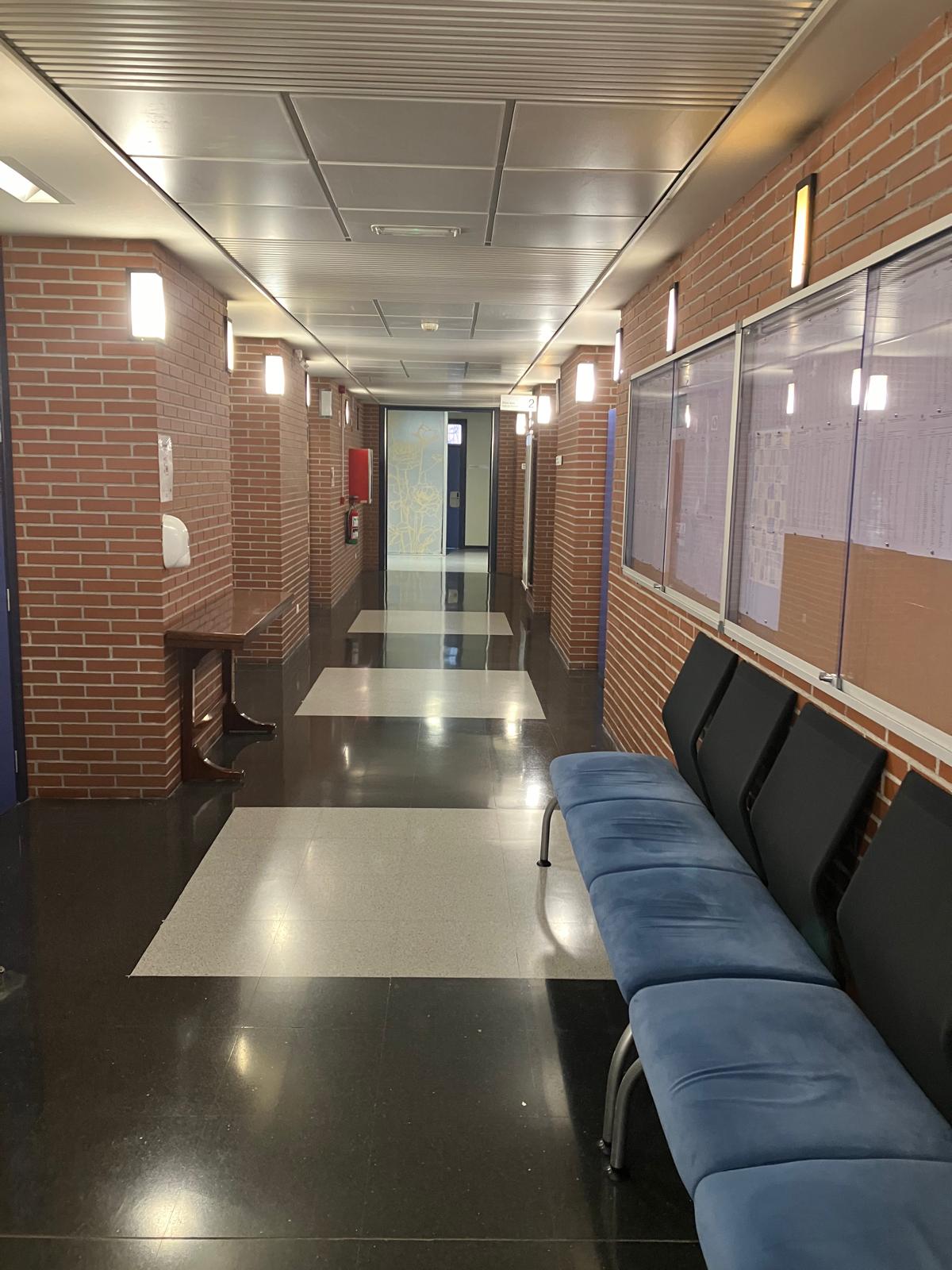
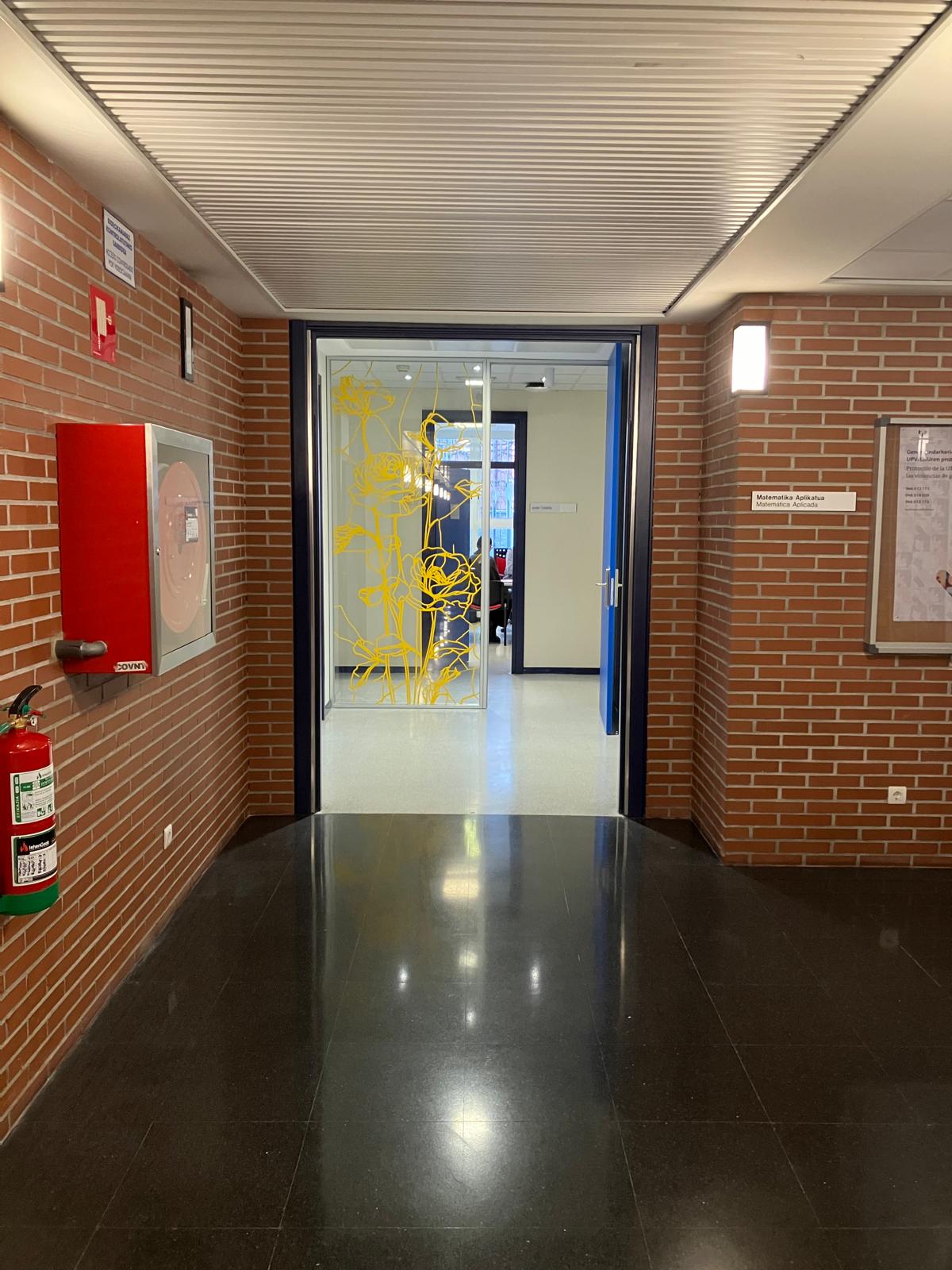
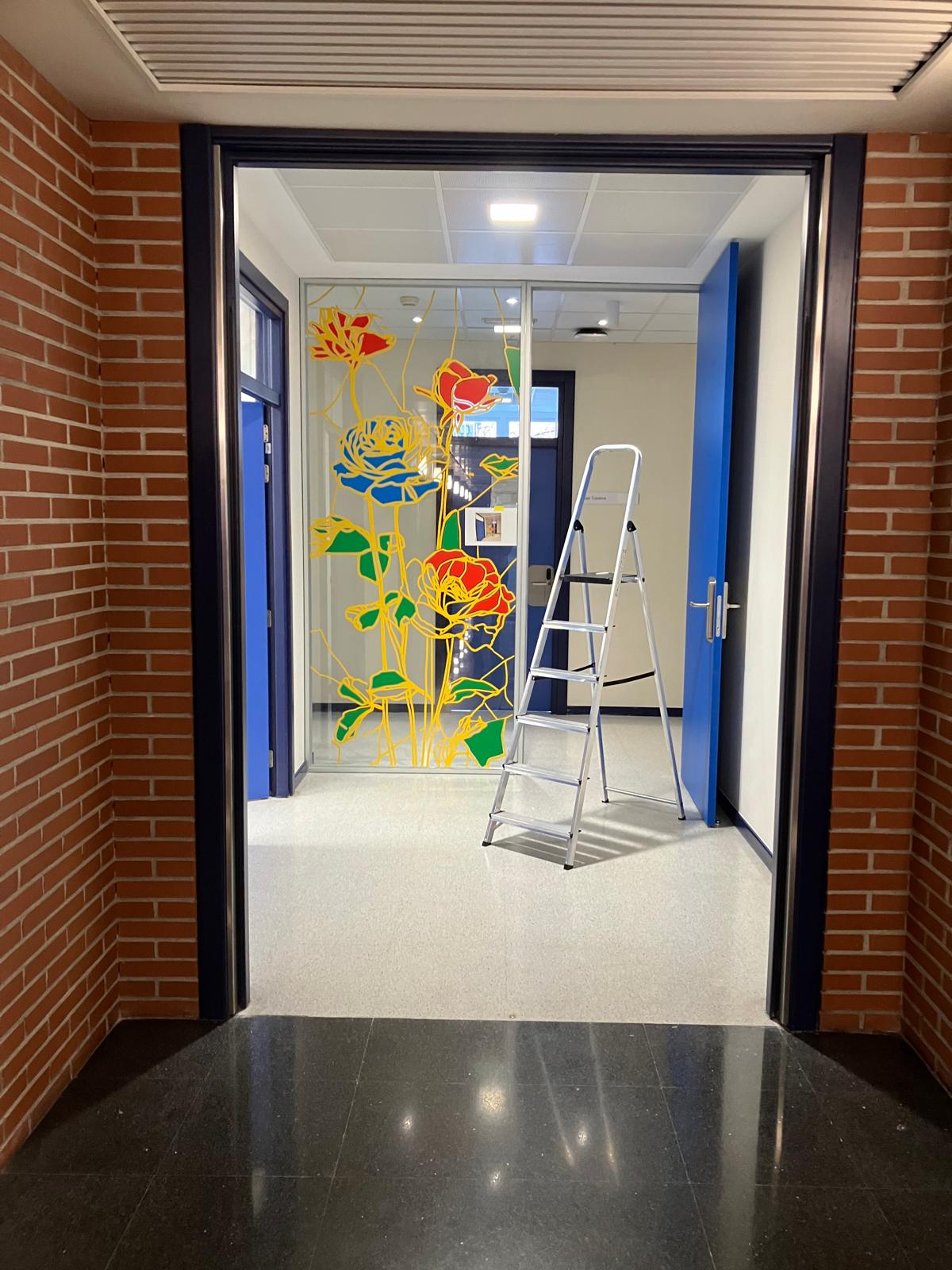
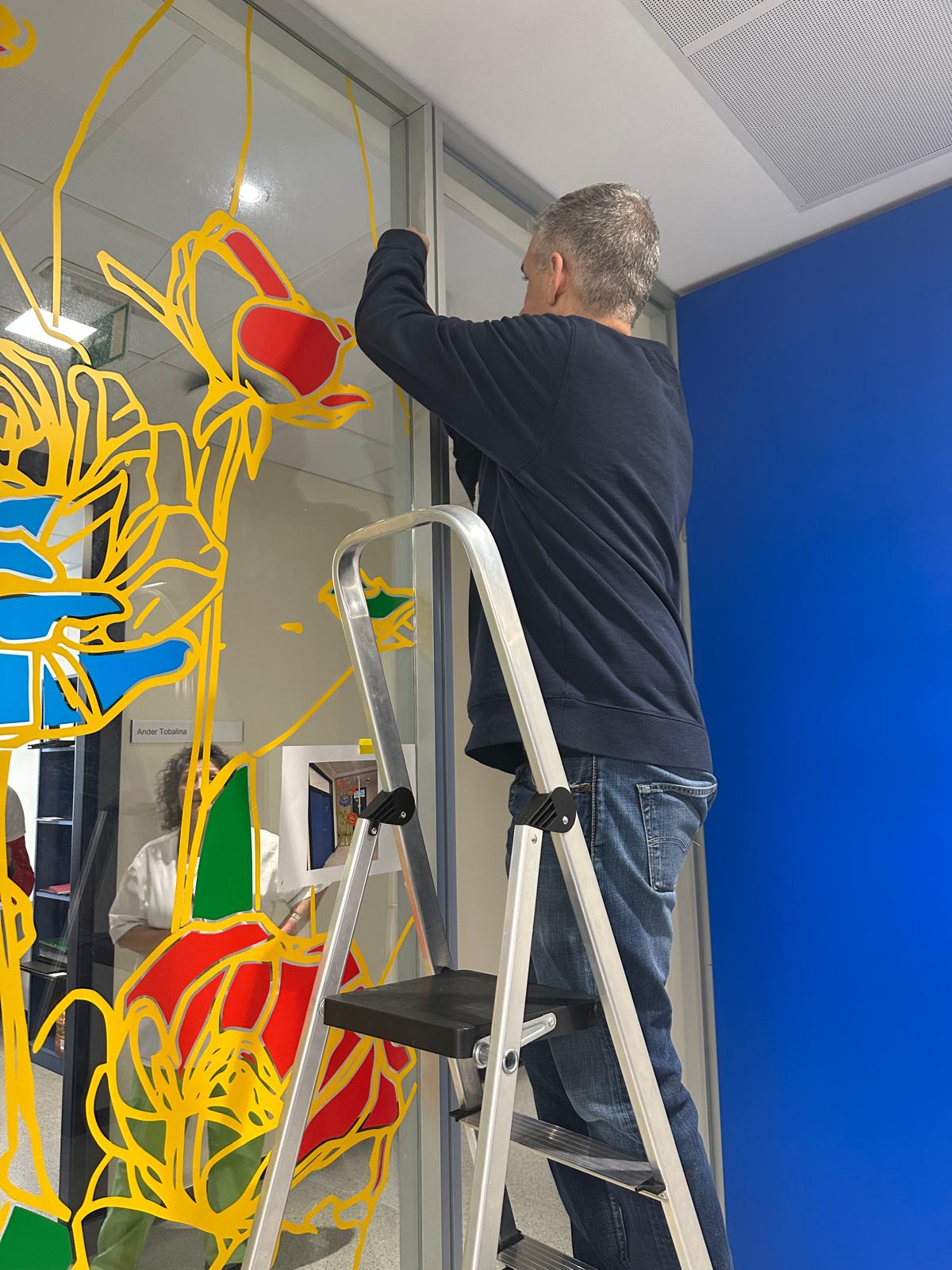
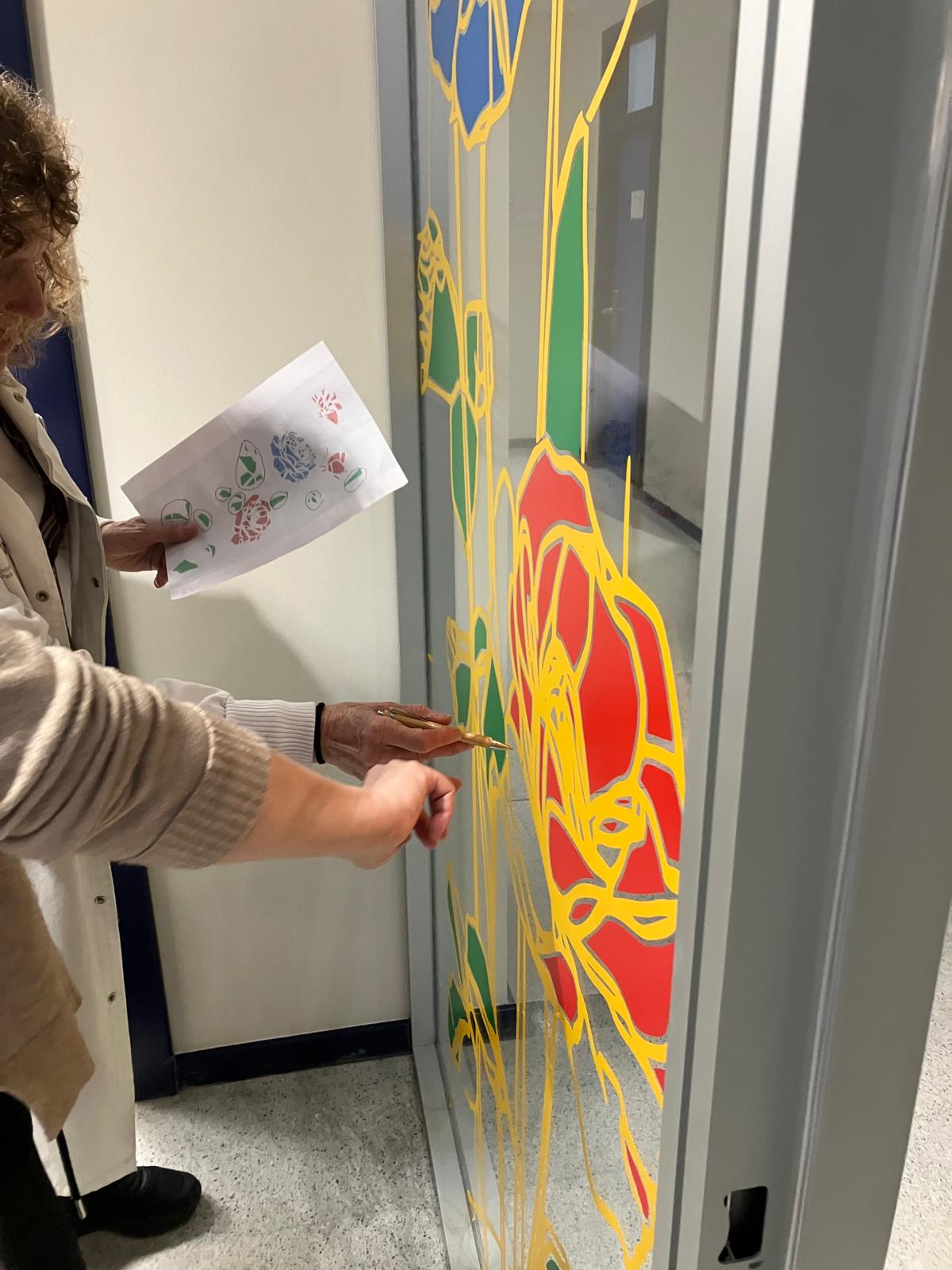
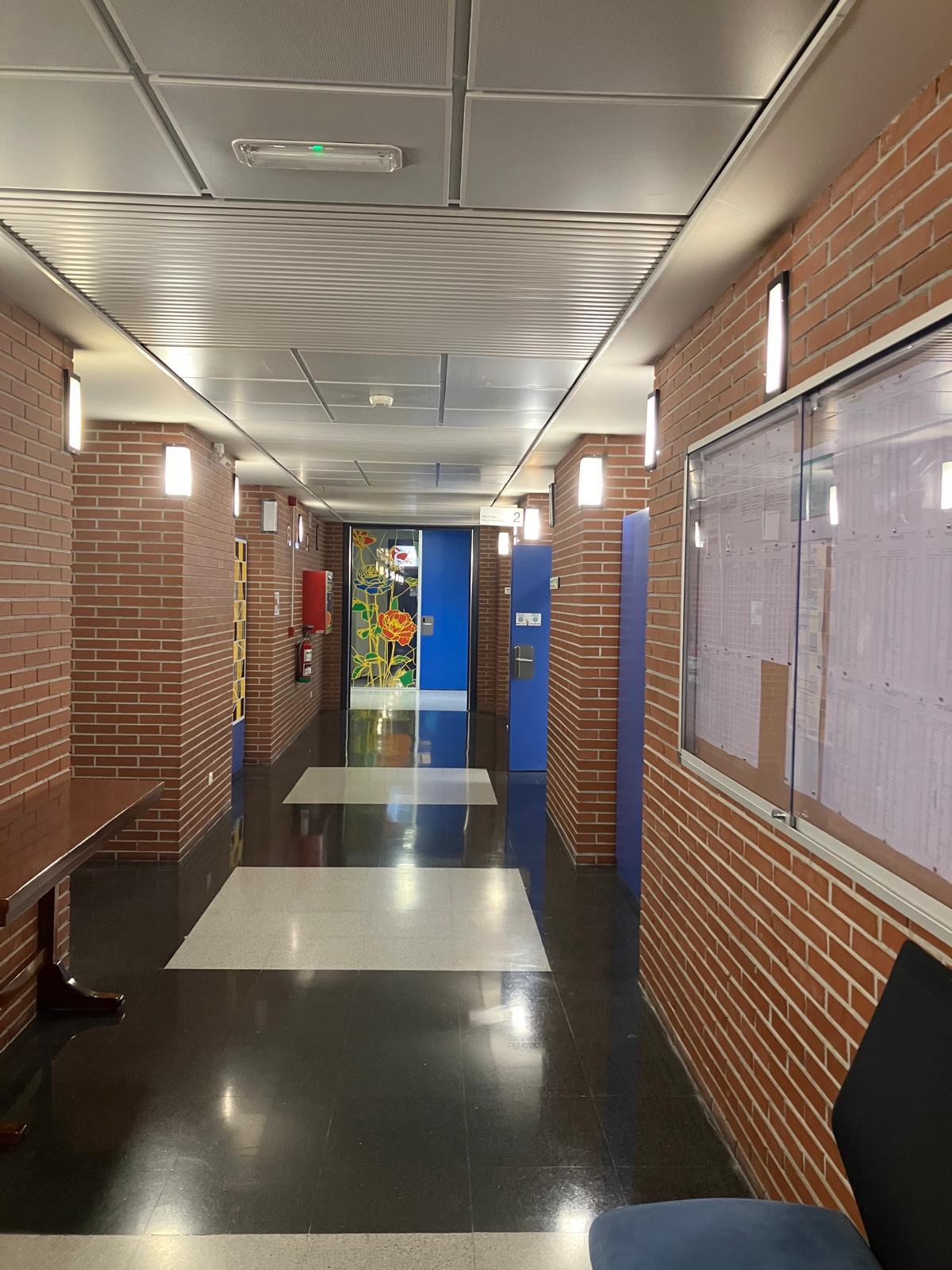
The mural is located on a glass partition separating a corridor in the Mathematics Department from the entrance to a new laboratory in the School of Engineering, QTAI Lab. From this strategic position, the artwork acts as an integrating wall: it allows light to pass through, maintains the transparency of the space, and establishes a visual link between areas traditionally associated with abstract thought, scientific rigor, and technological experimentation.
The choice of a floral iconography—simple, open, and luminous—introduces a poetic and approachable dimension into an academic setting, generating a positive and joyful reception from faculty and those who frequent the space. The artwork does not interrupt the functional use of the space but rather complements and enriches it, transforming everyday movement into a shared visual experience.
From a conceptual standpoint, the use of simplified forms and basic colors engages with the traditions of modern and contemporary art. A resonance is established with Andy Warhol's Flowers series, where the natural motif is transformed into a powerful graphic symbol through repetition and color, as well as with the artistic explorations of Henri Matisse, especially in works like The Parrot and the Mermaid, in which form is refined and color acquires a structural and expressive role.
The transparency of the glass and the layering of the vinyl cause the work to change according to the light, the viewpoint, and the movement of people, reinforcing its dynamic and relational character. In this sense, the mural functions as a visual threshold between disciplines, uniting art, mathematics, and engineering on a single perceptual plane.