
“New Materials for a Better Life”. Workshop BCMaterials
Date
25/11/2026, 09:00 - 14:00
Hours
Wednesday
Eguna: 2026/11/25
Ordua: 9:00 - 14:00
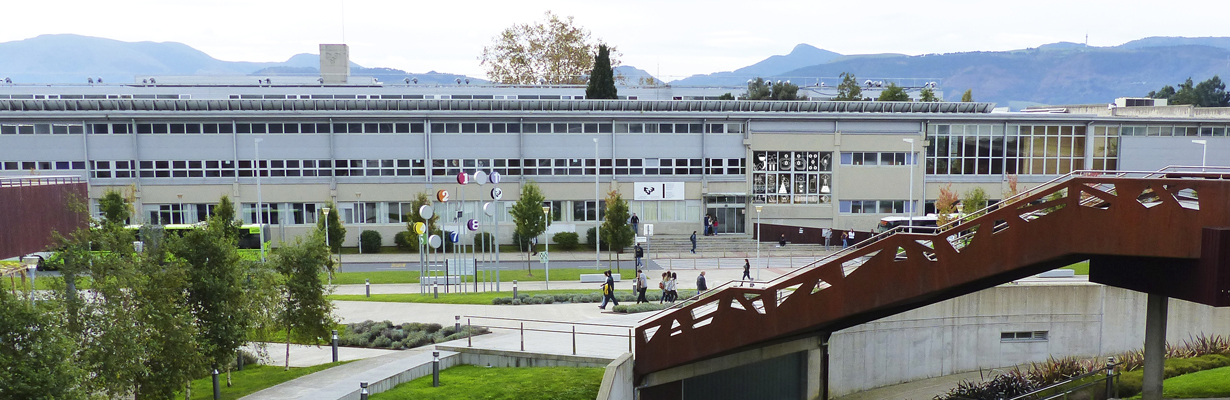
Lekua: auditorio del edificio Martina Casiano (Parque
Científico de la UPV/EHU, Leioa)
BCMaterials, the Basque Center for Materials, Applications and
Nanostructures, will hold the new edition of its annual workshop “New
Materials for a Better Life” on Wednesday, 25 November 2026, from 9:00
to 14:00, in the auditorium of the Martina Casiano Building (UPV/EHU
Science Park, Leioa). This year’s theme is “Catalysis for the Green
Transition: Bridging Catalyst Understanding and Process Optimization”.
Towards better catalysis processes
A catalyst is a substance that speeds up a chemical reaction without
being used up in the process: when the reaction ends, it is still
there and can be reused. It can also steer the reaction towards the
desired product and away from unwanted ones, a property known as
selectivity. As a result, industry needs less energy, wastes less raw
material and generates fewer toxic by-products. Catalysts are already
behind fuels, fertilisers, medicines and plastics, and now they are
key to cleaner alternatives: capturing and reusing CO2, producing
clean hydrogen, or turning biomass and waste into useful products.
Advanced materials drive this progress, from catalysts based on
abundant metals that replace scarce or toxic ones to enzymes and
nanocatalysts. Better catalysts mean a cleaner, more competitive
industry and, ultimately, healthier environments and more sustainable products.
The event’s programme
After the opening by BCMaterials Scientific Director Senentxu Lanceros-Méndez, the programme has three blocks.
Block I, on process optimisation for green energy vectors, starts with Pedro Luis Arias (School of Engineering, EHU), who will explain how catalysis is moving from molecular understanding to autonomous discovery. Olga Gómez de Miranda Jiménez de Aberasturi (Tecnalia) will then present new bio-based materials for a more sustainable future.
Block II, on catalyst development and understanding, opens with Pablo Beato (CFM-MPC), who will show how Raman spectroscopy, a light-based technique, makes it possible to watch zeolites, porous materials widely used as catalysts, form, work and lose their activity. Max Garcia-Melchor (CIC energiGUNE) will describe how machine learning can accelerate the discovery of catalysts that convert CO2 using electricity, and Fernando López-Gallego (CIC biomaGUNE) will address biocatalytic materials for chemical manufacturing. Ana Beloqui (Polymat) will present innovative strategies to enhance enzymatic catalysis, and Hugo Salazar (BCMaterials) will explain how engineering the surface of MXenes, a family of two-dimensional materials, allows them to turn nitrate, a common water pollutant, into ammonia using light or mechanical energy.
Block III offers an industrial perspective on the green transition with Jon Meléndez Rey (H2Site), on pure hydrogen generation with advanced membrane technology, and Iker Agirrezabal (SBS), on adding value to plastic and bio-residues.
Attendance is free but registration is required before 18 November: https://docs.google.com/forms/d/e/1FAIpQLScXZpKD2CaKw_UU-iEUHK2-YoxcxLcBq92KnL-5i7jjWUaG5A/viewform
More information at https://www.nm4bl.org/