Bioforo. "8th Alumni Research Meeting"
Fecha
10/12/2025, 09:45 - 13:00
Horario
Miércoles
Lugar
Lugar
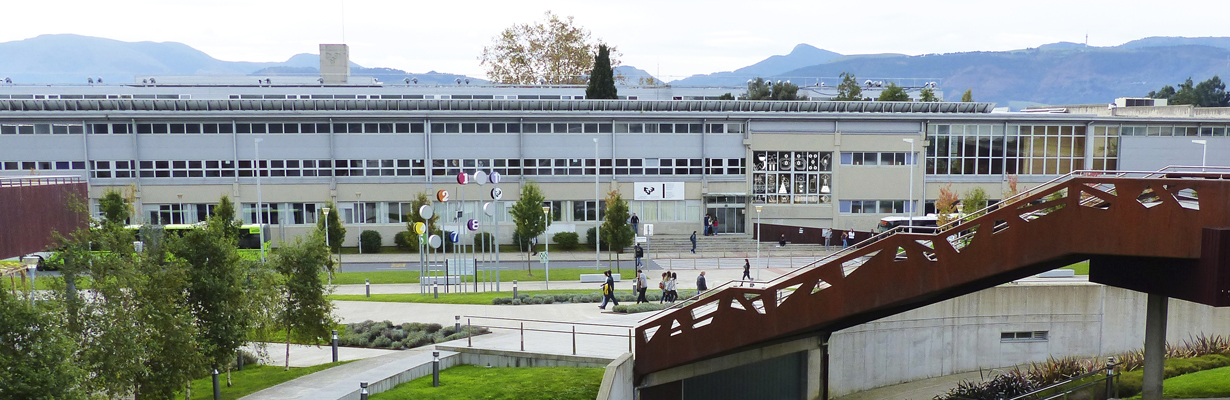
Paraninfo - Facultad de Ciencia y Tecnología
Sarriena. -48940- Leioa-Erandio (Bizkaia)
Ciclo
Master in Molecular Biology and Biomedicine
Día: 2025/12/10
Hora: 09:45
Lugar: Paraninfo
One free-choice credit granted
Attendance certificates are provided
REGISTRATION (required. Re: Bioforo): ana.zubiaga@ehu.eus
Please indicate: Name, last name(s), DNI; student (y/n); Degree program and year
Don’t forget to use your institutional email address
Maria Rodríguez López
She is a molecular biologist and genomics specialist with over 17 years of research experience across academia and biomedical institutes. She began her scientific journey studying Biology at the University of the Basque Country before moving to Madrid to specialise in Genetics and Biotechnology. Maria earned her PhD in Genetics and Cellular Biology from the Complutense University of Madrid, where she investigated molecular mechanisms involved in genome regulation using fission yeast as a model.
In 2013, Maria moved to London, where she developed the core of her scientific career over more than a decade. As a postdoctoral researcher at University College London she focused on studying gene regulation and ageing, and explored the “dark genome”, uncovering new functions for non-coding RNAs and unstudied proteins. Later, at the Francis Crick Institute, she pursued single-cell and spatial transcriptomics technologies to study neurodegenerative diseases. She also served as Project Manager of the Crick’s Genomics Core Facility, coordinating hundreds of projects, managing large-scale sequencing projects, leading a multidisciplinary genomics team and driving innovation in sequencing workflows.
Most recently, Maria led the Genomics Unit at the European Institute of Oncology in Milan, where she provided strategic direction for genomic technology development supporting cancer research. Alongside her research, she is passionate about mentoring young scientists and promoting women in STEM. Her career illustrates how curiosity, persistence, and collaboration can create a unique path through science.
Juan Rodríguez-Vita
He obtained his PhD at the Fundación Jiménez Díaz (FJD) in Madrid, Spain. Following postdoctoral work at the Centre d’Immunologie de Marseille-Luminy (CIML) in France and at IDIBAPS in Barcelona, he joined the German Cancer Research Center (DKFZ) in Heidelberg as a Project Leader in the Vascular Signaling and Cancer Division. In September 2021, he established his own research group at the Centro de Investigación Príncipe Felipe (CIPF) in Valencia, Spain. His scientific career is characterized by work across diverse cellular systems—vascular smooth muscle cells, macrophages, endothelial cells—providing him with a broad and integrative view of disease mechanisms, particularly in the fields of fibrosis, endothelial dysfunction, and tumor biology. His work has led to the publication of high-impact papers in leading international journals.
Dr. Rodríguez-Vita’s research focuses on the communication signals between tumor cells and the surrounding stroma. His work has revealed how tumor cells reprogram macrophage membrane composition to disrupt inflammatory signaling and promote immune suppression, as well as how they induce endothelial cell senescence to enhance vascular permeability and metastasis. Building on these insights, his group has identified hyaluronic acid as a central regulator of stromal function, uncovering mechanisms by which tumor cells modulate hyaluronan receptors in macrophages and by which extracellular matrix cross-linking promotes tumor cell plasticity and metastatic potential. His recent efforts also explore the role of hyaluronic acid in resolving inflammation and its impact on cancer cachexia. With this systemic perspective, Dr. Rodríguez-Vita continues to investigate how intercellular communication shapes tumor development and influences disease progression.
Begoña Sot Sanz
She began her scientific career investigating the molecular mechanisms regulating protein activity, establishing the basis for her later specialization in nanobiotechnology and nanomedicine. She earned her PhD at the Universidad del País Vasco (1998–2003) under Prof. Arturo Muga, uncovering how the GroEL chaperonin responds to heat shock. She then completed postdoctoral training at leading European institutions—MRC Cambridge with Prof. Sir Alan Fersht, the Max Planck Institute in Dortmund with Prof. Alfred Wittinghofer as a Humboldt Fellow, and CNB/CSIC and IMDEA Nanociencia through JAE-DOC and Ramón y Cajal contracts—producing several high-impact publications across protein biophysics, cancerrelated signaling, and amyloid aggregation.
Since 2017, Dr. Sot Sanz has focused on applying proteins as tools in nanotechnology and nanomedicine. After serving as an Assistant Research Professor at IMDEA Nanociencia, she joined CIEMAT’s Unit of Innovative Biomedicine in 2021 as a permanent Investigador Distinguido. Her current research centers on developing nanostructured platforms for therapeutic gene editing and molecular diagnostics. Specifically, her group designs non-viral lipid and inorganic nanoparticles for the targeted delivery of CRISPR RNPs (Cas12, Cas9, Cas13), and leverages the high specificity of Cas12a and Cas13 to create point-of-care diagnostic systems for detecting mutated genes in liquid biopsies. Through this integrative molecular and nanotechnological approach, Dr. Sot Sanz advances innovative solutions in precision medicine and biomedical engineering.
Guillermo Montoya
He studied Biochemistry and Biophysics at the University of the Basque Country and got his PhD in Chemistry at the University of Zaragoza. After postdoctoral training at the Max Planck Institute for Biophysics in Frankfurt and EMBL in Heidelberg, he became Group Leader and later acting Director of the Structural Biology Programme at CNIO. Since 2014 he is Research Director of the Protein Structure and Function Programme of the Novo Nordisk Foundation Center for Protein Research and full Professor at the University of Copenhagen.
The research interests of his group involve the structure-function analysis of macromolecular machines, involved in cell division, genome maintenance and their connection with molecular scissors that initiate genome editing. The contributions of his lab in the field of programable endonucleases resulted in a spin-off company, Twelve Bio, developing Cas12a derived tools to correct mutations in genetic diseases, which was acquired by the US company Ensoma. Guillermo has received the V Health Sciences Prize from the Caja Rural de Granada and the Spanish Ministry of Health and the 2009 National Prize in Biomedicine from the Mutua Madrileña Foundation. He is an elected member of EMBO since 2016 and received a Novo Nordisk Foundation Distinguished Investigator Award in 2019 and the Distinguished innovator Award in 2023. He is also recipient of an ERC Advanced Grant in 2023.
Información de la comunicación
- Título: “Neurogenesis and transcriptomics provide a new understanding on brain evolution.”
- Autoría: Vice-chancellor's office for Bizkaia campus and School of Science and Technology (UPV/EHU), Biofisika Foundation and Biofisika Institute (UPV/EHU-CSIC), Master in Molecular Biology & Biomedicine.
- Ponente: Dr. Fernando García Moreno. Ikerbasque Research Associate Professor. Achucarro Basque Center for Neuroscience.